Vibe-Coded Apps Making Money: 13 Case Studies, Week of Oct 5, 2026
October 7, 2026 · 1492 words
This week covers 13 apps built with AI coding tools. Six report $10K or more a month. Four show no revenue number at all, and one is a free site with a security postmortem. Every figure here is self-reported unless we say otherwise.
| App | What | AI tool | Builder | Revenue + label | Read |
|---|---|---|---|---|---|
| Once | Shared "disposable camera" for weddings and parties | Claude Code | Unknown | About $22K/mo (spring 2026) · Self-reported | Read |
| Citare | Tracks how brands appear in AI search | Claude Code | Non-developer | Free to $299/mo plans · Pricing only | Read |
| Flowfy | Spanish-language budget app (iOS) | Rork | Non-developer | $22K total over 5 months (May 2026) · Self-reported | Read |
| Algrow | YouTube research tool plus AI video generation | ChatGPT, then Cursor | Non-developer | About $14K in 30 days (Jan 2026) · Self-reported | Read |
| STOPPR | Sugar-reset program app for women | Cursor | Developer | $14K/mo (founder-level total) · Self-reported | Read |
| Disclosed.Online | Free directory of bug-bounty researcher profiles | Lovable and Cursor | Unknown | None (free site) · Not disclosed | Read |
| Cat On Chair | Pomodoro focus timer with a cartoon cat (iOS) | ChatGPT Pro | Non-developer | About $18K in 30 days (Apr 2026) · Self-reported | Read |
| Photos by Nathan | Fine-art print store (Security Lens example) | Bolt | Unknown | Not disclosed | Read |
| Motionvid | Text prompt to animated video | Cursor | Developer | $7K MRR (Sep 2026) · Self-reported | Read |
| WhimFiles | Native macOS file manager | Claude Code | Unknown | $24.99 one-time · Pricing only | Read |
| CutCoach | Weight-cut planner for fighters (iOS) | Cursor and ChatGPT | Developer | $20K/mo · Self-reported | Read |
| Kbag | Stockholm soil and gravel delivery with instant pricing | Lovable | Unknown (founder plus a friend) | Not disclosed; 1 to 5 trucks in 3 months (self-reported) · Pricing only | Read |
| Lancer | AI agent that finds Upwork jobs and sends proposals | Cursor | Developer | $10K/mo · Self-reported | Read |

The apps
Once. Two co-founders built a shared "disposable camera" for weddings and parties with Claude Code. They lined up ten real event dates before writing code. They report about $22K a month by spring 2026 (self-reported, Starter Story). Pricing is one payment per event, scaled by guest count. Read the Once case study.
Citare (Stack Breakdown). A self-described non-coder built this AI-search visibility tracker in 12 days with Claude Code. The stack is ordinary TypeScript and Supabase. The unusual part is eight MCP servers, plug-ins that let Claude Code operate his other tools. Revenue is not disclosed; plans run from free to $299 a month (pricing only). Read the Citare stack breakdown.
Flowfy. A 22-year-old mechanical engineer with no coding background built this Spanish-language budget app in Rork within days. Rork's case study reports $22K total by May 2026 and $10K in the first 30 days of charging (self-reported). He grew users for weeks before switching the paywall on. Read the Flowfy case study.
Algrow (First 100 Users). A university student with no coding background built this YouTube research tool, first with ChatGPT voice mode, then Cursor. The first 400 users came from Discord servers where people asked the exact question it answers. He reports about $14K in the last 30 days (self-reported, January 2026). Read how Algrow found its first users.
STOPPR. A developer with 13 years in tech built this sugar-reset app for women with Cursor and Figma designs. He reports $14K a month three months after launch (self-reported). That is his founder-level total, not STOPPR alone. Cheap, fast influencer views drove growth. Read the STOPPR case study.
Disclosed.Online (Postmortem). A security professional built this free directory of bug-bounty researchers in three days with Lovable and Cursor. Within days, two researchers privately reported two Supabase gaps. He fixed both and wrote up what went wrong. There is no revenue; the site is free. Read the postmortem.
Cat On Chair. A former product designer and his partner, an illustrator, built this cat-themed focus timer, with ChatGPT Pro writing the code. They report about $18K in the 30 days before April 13, 2026, and about $80K over 8 to 9 months (self-reported, Starter Story). Design polish and an audience that liked their style did the selling. Read the Cat On Chair case study.
Photos by Nathan (Security Lens). A photographer built his fine-art print store with Bolt for about $400 to $500. An agency had quoted $8K to $10K. Revenue is not disclosed. We used it as an example of a store that takes payments. We did not test his site. Read the print-shop security checks.
Motionvid. A self-taught developer built a test version with Cursor in about three weeks, for about $300 in tokens. It turns text prompts into animated videos. He reports $7K MRR, 100K+ signups and $120K from one AppSumo campaign (self-reported). Careful credit math mattered as much as the build. Read the Motionvid case study.
WhimFiles (Pricing Teardown). A native Mac file manager built with Claude Code, per its Show HN post. It sells for $24.99 once, with a 30-day free trial (pricing only). Revenue is not disclosed. One-time pricing fits because the app has no servers or AI costs. Read the WhimFiles pricing teardown.
CutCoach. A founder who left college built this weight-cut planner for fighters with Cursor and ChatGPT. The MVP took about a month, and he rebuilt it after feedback. He reports $20K a month and $60K+ over six months (self-reported, Starter Story). Small posts proved demand before he paid creators. Read the CutCoach case study.
Kbag (Non-Dev Build). A Stockholm groundworks business owner and a tech-savvy friend built this soil-delivery site in Lovable for about $500. It shows an instant price per address. Revenue is not disclosed. The business grew from one truck to five in three months (self-reported, Lovable's customer story). Read how Kbag was built.
Lancer. Two developers who ran an agency built this AI agent that finds Upwork jobs and sends proposals. They now build with Cursor and Claude Opus 4.5. They report $10K a month by month three or four (self-reported). Growth came from Upwork coaches paid lifetime commissions, with zero paid ads. Read the Lancer case study.
Patterns this week
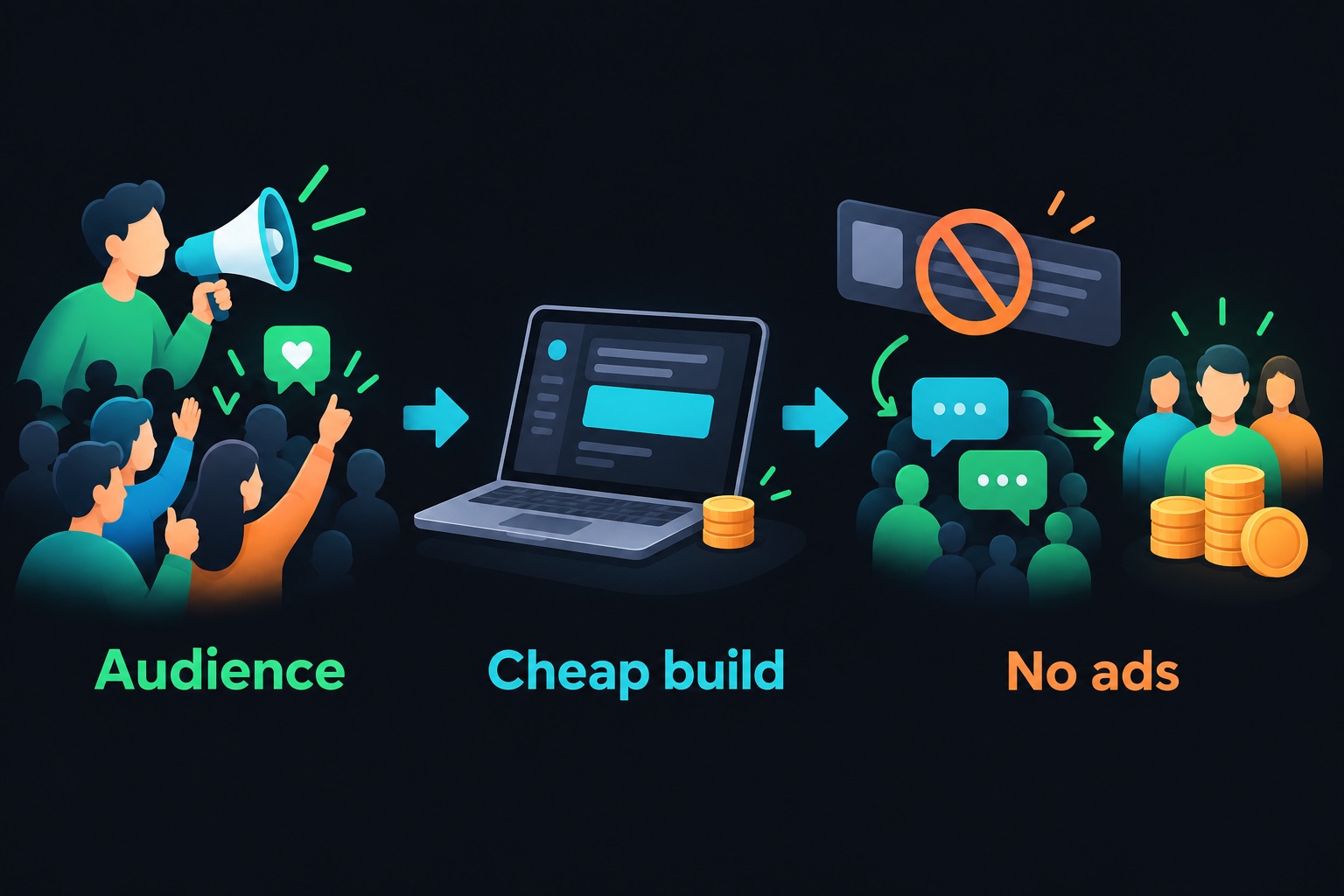
- Consumer apps grew through people who already had attention. STOPPR used influencer views. CutCoach proved demand with small posts, then paid creators. Cat On Chair's first week leaned on the illustrator's existing following.
- Builds were cheap. Motionvid's first test cost about $300 in tokens. Kbag's first version cost about $500 in Lovable. The print store cost about $400 to $500 to build.
- Where the money did not come from: paid ads or launch posts. Lancer ran zero paid ads. Algrow's first 400 users came from Discord conversations, not a launch. Both went where buyers were already asking questions.
- Five of 13 show no revenue figure. Citare, WhimFiles, Kbag and the print store don't disclose revenue, and Disclosed.Online is free. A pricing page shows intent, not income.
Security takeaway of the week
The print-shop case study covers the most common hole in AI-built stores: trusting the browser. If the browser sends the price, anyone can edit it and pay $1. If a "thank you" page triggers the order, anyone can load that page without paying. Let the server look up prices. Let Stripe's webhook, a signed message from Stripe to your server, confirm payment before you fulfill. Step by step: Stripe webhook security.
Building something like these and want a second pair of eyes before real users arrive? Email [email protected] for a security audit of your vibe-coded app.
Key takeaway
The builds this week took days to a few months and often cost a few hundred dollars. The revenue came from rooms, creators and partners the founders reached on purpose. Plan where your first 100 users will come from before you open your AI editor.
Every case study so far, grouped by revenue: Vibe-coded apps making money. Turning your own project into income: From vibe code to cash.
Sources
- Once: /blog/once-disposable-camera-app-22k-claude-code
- Citare: /blog/citare-claude-code-stack-breakdown
- Flowfy: /blog/flowfy-rork-budget-app-revenue-case-study
- Algrow: /blog/algrow-first-users-discord-vibe-coded
- STOPPR: /blog/stoppr-revenue-vibe-coded-cursor
- Disclosed.Online postmortem: /blog/disclosed-online-vibe-coding-postmortem-supabase
- Cat On Chair: /blog/cat-on-chair-revenue-vibe-coded-chatgpt
- Photos by Nathan: /blog/bolt-print-store-security-checks
- Motionvid: /blog/motionvid-revenue-vibe-coded-cursor
- WhimFiles: /blog/whimfiles-pricing-one-time-claude-code
- CutCoach: /blog/cutcoach-vibe-coded-cursor-case-study
- Kbag: /blog/kbag-lovable-non-developer-case-study
- Lancer: /blog/lancer-upwork-ai-agent-cursor-case-study