How Kbag Was Vibe-Coded with Lovable: Stack, Pricing, First Users
October 7, 2026 · 1282 words
| Fact | Value |
|---|---|
| What it is | Stockholm crane-truck delivery of soil, gravel and stone in 1 m³ big bags, plus waste pickup, with an instant per-address price on the website |
| Builder | Founder from outside tech (Thomas "Kedde" Kednert, groundworks business owner; coding background not stated) + a tech-savvy friend described as "the architect"; the friend's coding background isn't stated |
| AI tool | Lovable |
| Stack | Lovable, Volvo Connect Fleet Management API, Google Maps |
| Time to launch | First version in three weeks over Christmas 2025, about $500 in Lovable cost; launched spring 2026 |
| Revenue | Not disclosed. Growth: 1 → 5 trucks in three months (self-reported, Lovable customer story); pricing shown per address on site (pricing only) |
| Source | Lovable blog, September 2026 |
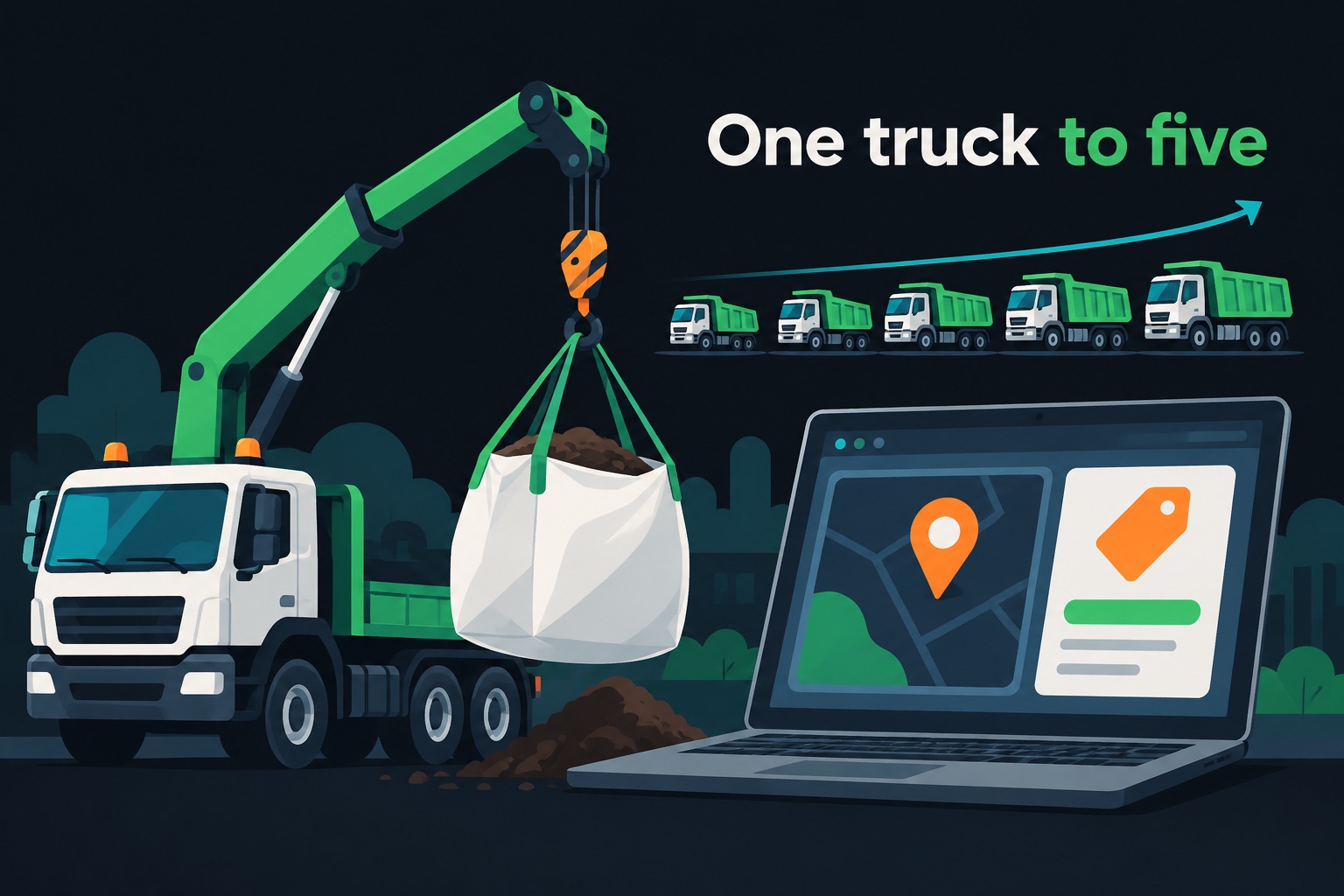
Most vibe-coding case studies are SaaS tools sold to other developers. Kbag is different. It's a real-world trucking business in Stockholm, and its core product is a pricing engine built with Lovable (an AI app builder that turns chat prompts into a working web app).
Three months after launching in spring 2026, the company went from one crane truck to five, according to Lovable's own customer story. Revenue isn't disclosed. But the story is a useful model for anyone who doesn't code and has an idea rooted in a physical industry.
One note up front: this is a vendor case study, written by Lovable. Treat the numbers as the company's own claims.
Who built it: a crane-truck owner and a tech-savvy friend
Thomas Kednert, known locally as Kedde, runs a groundworks business in Rotebro, just north of Stockholm. He has run his own company for more than two decades.
Driving around Stockholm, he kept seeing waste. The local industry prices deliveries by zone. So a fully loaded truck might cross the city to drop one bag of soil and drive back empty. Meanwhile another empty truck goes out to collect a bag of waste around the corner.
He carried the idea of pooling those trips for nearly ten years. In 2025, a tech-savvy friend started using Lovable. Together they decided it was finally time.
Here is the honest detail most summaries skip: the friend did the building. The article calls him "the architect." It doesn't say whether that means a building architect or a software architect, or whether he could code before. The story doesn't say whether Kedde codes either; it presents him as a crane truck driver. His own line in the story:
"With the right architecture and Lovable behind you, even a crane truck driver like me can help revolutionize an entire industry." — Kedde, via Lovable
So this is a story of a founder from outside tech, with one helper. That is how many real non-dev builds work.
Why Lovable, and what $500 bought
Over the Christmas break of 2025, the friend started building in Lovable. Three weeks and roughly $500 in Lovable cost later, the first version was ready.
That's the whole reported budget for the software. No agency. No hired developers mentioned.
The result is live at kbag.se. As of September 2026, the site offers:
- Soil, crushed stone, gravel and stone flour delivered in 1 m³ big bags by crane truck.
- Construction-waste pickup (landfill, combustible, wood).
- Coverage of 26 municipalities within about 70 km of Segeltorp.
- An instant price for your exact address, with a claim of 30–70% lower transport prices than competitors.
The hard part: a pricing engine, not a website
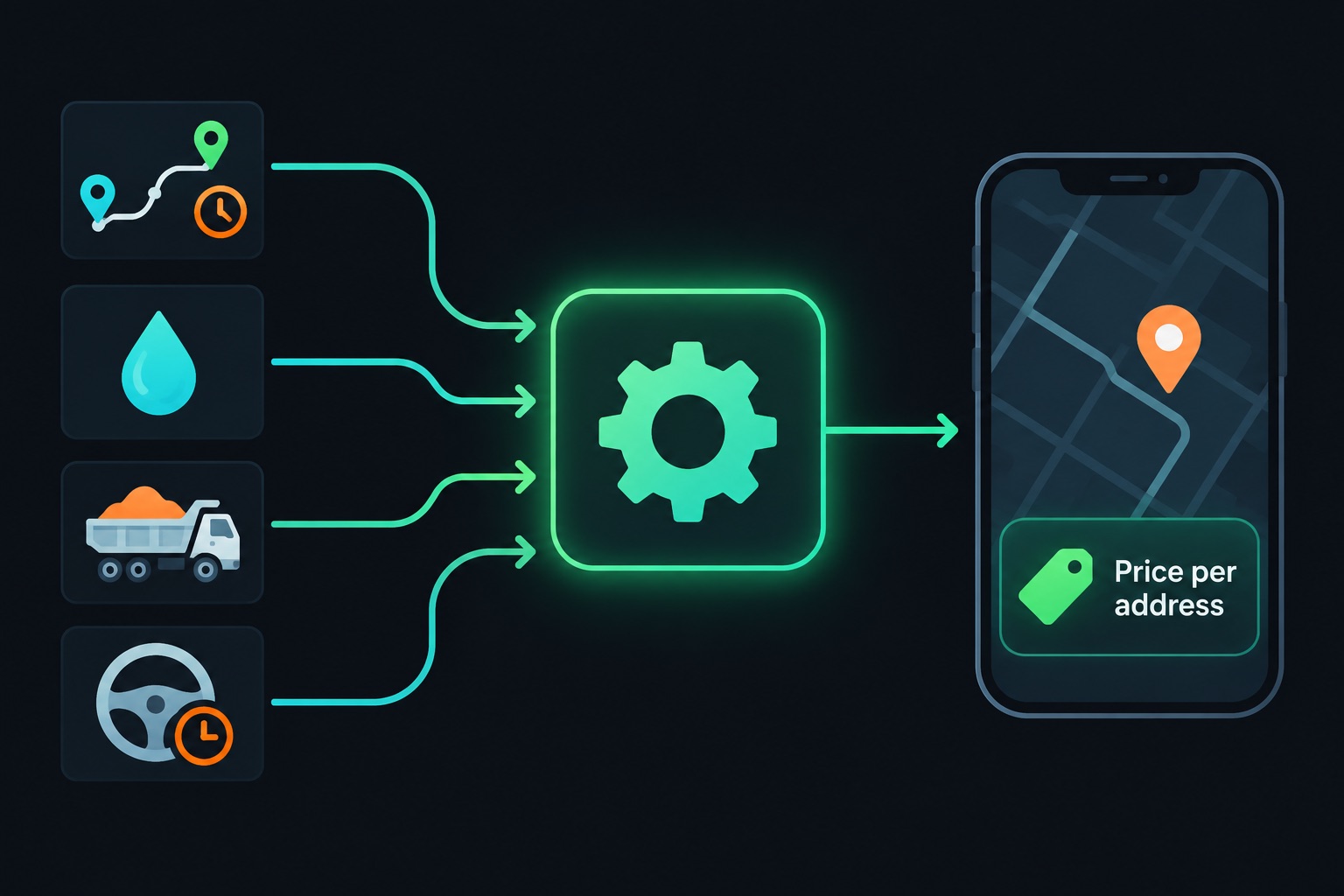
The website is simple. The interesting part is the algorithm behind the price.
Instead of zones, Kbag calculates a price per address in real time. Per the Lovable story, it looks at how long the route takes, fuel use, the load already on the truck bed, spare capacity, and the driver's remaining legal driving time.
To do that, it reads live truck data from the Volvo Connect Fleet Management API (an API is a way for one program to ask another for data). Customers then track their delivery on Google Maps.
The pair set two targets before building: cut the end-customer price by 50%, and raise margins by 50% compared with industry peers. The story says they hit both. It also says Kbag expanded from home customers to business (B2B) customers.
Where they got stuck, and what they paid
The article doesn't describe any dead ends, bugs or rewrites. I won't invent them. What it does tell us about cost:
- Software: about $500 in Lovable usage.
- Time: three weeks over a holiday break.
- Help: one friend who already knew Lovable. Whether he was paid isn't stated.
- Domain knowledge: ten years of Kedde thinking about the problem from the driver's seat.
That last line is the expensive one, and you can't buy it with credits.
What a non-developer should copy
- Start from a problem you see every day. Kedde watched half-empty trucks for years.
- Set numeric targets before you build. "50% cheaper, 50% better margin" told the builder what the algorithm had to do.
- Borrow a technical friend for the architecture. Lovable wrote the code; a person still decided how the pricing logic should work.
- Plug into data you already have. The trucks already reported location and load through Volvo Connect. The app used that instead of asking drivers to type.
If you vibe-code this
A quote-and-order platform like this handles customer addresses, live truck data and prices. Here are checks for this type of app. They are general, not findings about Kbag.
- Keep the fleet API key on the server. Anything in browser code is public. Call the fleet API from a backend function. See environment variables security.
- Recalculate the price on the server at checkout. Never trust a price the browser sends back. Validate every input. See Zod input validation.
- Rate-limit the quote endpoint. Each quote may call paid map and fleet APIs. Bots can run up your bill. See API rate limiting.
- Protect orders and addresses. One customer must not see another's order by changing an ID in the URL. If your Lovable app uses Supabase, turn on row level security. See IDOR explained and Supabase RLS.
A server-side quote function (Supabase Edge Function style) that keeps the key private:
// supabase/functions/quote/index.ts
Deno.serve(async (req) => {
  const { address } = await req.json();
  if (typeof address !== "string" || address.length > 200) {
    return new Response("Invalid address", { status: 400 });
  }
  const apiKey = Deno.env.get("FLEET_API_KEY"); // stays on the server
  const price = await calculatePrice(address, apiKey); // your pricing logic
  return Response.json({ price });
});
Built something like this with Lovable and not sure it's locked down? Email [email protected] for a security audit.
Key takeaway
Kbag shows the non-developer path that actually works: a founder with deep industry knowledge, a friend who knows the tool, clear numeric goals, and about $500 of Lovable. Revenue isn't public, but going from one truck to five in three months says the pricing engine does its job.
More case studies: vibe-coded apps making money. Before you launch, read the vibe coding security guide.
Sources
- Lovable customer story: https://lovable.dev/blog/kbag-logistics
- Kbag website: https://www.kbag.se