STOPPR Hit \$14K/mo: Vibe-Coded with Cursor (Case Study)
September 29, 2026 · 1432 words
| Field | Detail |
|---|---|
| What it is | STOPPR: a mobile app that helps women cut processed sugar with a 90-day reset program, AI coach and progress tracking |
| Builder | Developer (CS graduate, 13 years in tech, ex-trading-algorithm freelancer) |
| AI tool | Cursor with Claude 3.5 and the Figma MCP; now a GPT 5.5 CLI extension inside Cursor |
| Stack | Figma designs, Cursor-generated app code, Firebase backend |
| Time to launch | Not disclosed |
| Revenue | $5K in the first two weeks; $14K/mo three months later; now ~$15K/mo total, ~70% from his apps (self-reported; the $15K is founder total, not STOPPR alone) |
| Source | Indie Hackers interview, May 2026 |
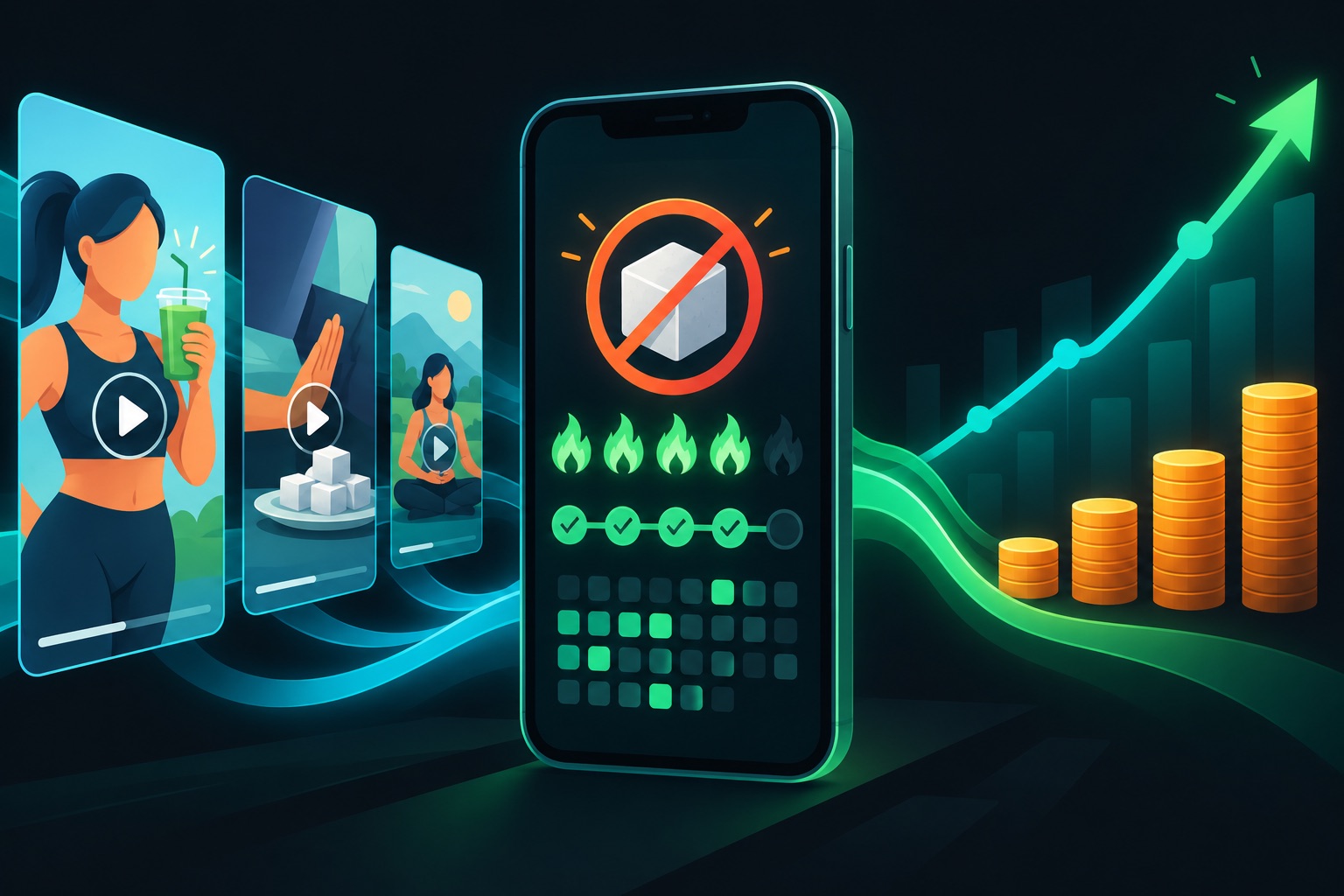
David Attias says his quit-sugar app STOPPR made $5,000 in its first two weeks. Three months later he was at $14,000 a month. He told Indie Hackers that he now brings in about $15,000 a month, with roughly 70% from his apps.
All of these numbers are self-reported. The $5K and $14K come right after STOPPR's launch; the $15K is his total income, not STOPPR alone. Still, the path is worth studying. He copied a proven app category, vibe-coded the app from designs, and sold it through influencer videos.
The core point: the code was the cheap part; distribution decided the revenue.
The problem: a proven category with a weak incumbent
David didn't start from a blank page. He found QUITTR, an app in a similar "quit a habit" category, that was reportedly making big money. He paid for it and tested it himself. His verdict on its quality was harsh, and he decided he could do better.
So STOPPR targets one habit: processed sugar cravings. Its Play Store listing (matched to the app by name; the interview gives no store link, so this is unconfirmed) describes a 90-day reset program, craving tools, video exercises, an AI coach and community challenges. It also says the app is a wellness tool, not medical treatment.
This is a pattern worth copying. Picking a category where people already pay removes the biggest risk. You still have to be better, or at least different.
How it was built
A designer friend made the screens in Figma, a design tool. David says AI was bad at design back then, so he kept a human on that part.
Then he used the Figma MCP inside Cursor. MCP (Model Context Protocol) lets an AI tool read data from another app. Here, it let Cursor read the Figma screens directly. He asked Cursor to vibe-code the front end and the back end for each screen, including animations and navigation. Claude 3.5 was the model doing the writing. Firebase, Google's hosted backend, handled data.
He says the output was 70–80% right even a year ago. He still tested every screen, button and flow by hand. When he found a bug, he asked Cursor to fix it.
Costs dropped over time. He says his AI tooling used to run about $1,000 a month. With his current setup, a GPT 5.5 CLI extension inside Cursor plus Firebase, he spends no more than $200.
How it makes money
STOPPR is a subscription app. The Play listing (unconfirmed match, see above) says a "STOPPR UNLIMITED" subscription unlocks full access. The listing doesn't show the price, and the interview doesn't give one either. So I can't break down plan prices here.
What we can see:
- A paid subscription is the whole model. There is no ad revenue mentioned.
- The onboarding was modeled on QUITTR's. In habit apps, onboarding (the first screens a new user sees) usually leads to the paywall. A strong onboarding flow matters as much as the core feature.
- Scale is modest but real. The Play listing shows 10K+ downloads and a 3.8-star rating from 345 reviews.
First users: influencer videos, not SEO
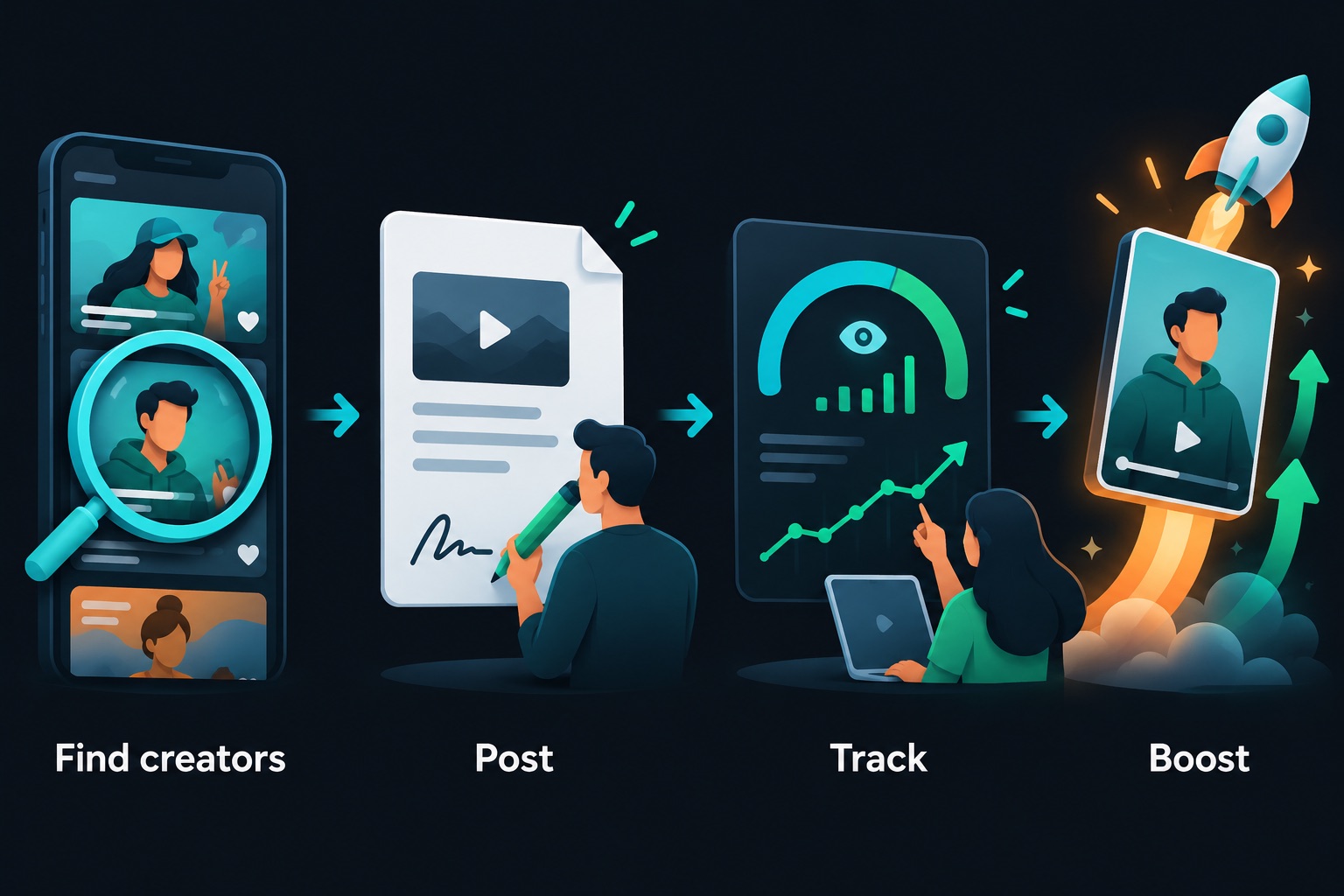
The $5K in two weeks came from two influencer videos that went viral. That is the whole early growth story.
His original deal looked like this:
- Creators got 20% of the fee up front for eight videos a month, four on Instagram and four on TikTok.
- The videos had to hit a combined minimum view count, based on each creator's recent average.
- He found creators by scrolling the For You feeds himself. He didn't use creator marketplaces.
- He tracked every video with
viral.app. When one started taking off, he boosted it with TikTok and Meta paid ads.
He says this got views for well under $1 CPM (cost per 1,000 views). That's very cheap attention.
Then it stalled. Revenue plateaued around $14K a month, and managing influencers took three-quarters of his day. His fix was to stop juggling many small creators. Now he finds one or two big influencers per niche and offers them equity (a share of the business) instead of cash.
His summary of the problem, in one line:
"Most influencers actually lack influence." — David Attias, Indie Hackers
What to copy
- Validate by paying for the leader. Buy the top app in your category and list what's weak.
- Keep humans where AI is weakest. For him that was design. Let AI build the screens from those designs.
- Budget testing time. 70–80% right still means clicking through every flow yourself.
- Find creators in the feed, not on marketplaces. Look for people who go viral repeatedly.
- Watch videos in real time and boost winners fast. Paid ads on a video that's already working are cheaper than ads on a cold one.
- Plan for the plateau. Many small creator deals don't scale with one founder's time.
If you vibe-code this
Habit and wellness apps store sensitive personal data, like weight or daily progress. They also sell subscriptions, often with an AI feature. These checks matter for this type of app. This is general guidance, not a claim about STOPPR.
- Lock down Firebase rules per user. Firestore rules decide who can read and write each document. Each user should only touch their own data. See Firebase security rules for vibe coders.
- Never let the app decide who is premium. If the client can write
isPremium: true, anyone can unlock the paywall. Only your server should write entitlements (the record of what a user paid for). - Keep AI coach keys off the device. Anything in the app bundle can be extracted. Call the AI through your own backend function. See secure storage in React Native.
- Guard the AI coach against prompt injection. Users can type instructions that try to override your system prompt. See prompt injection for vibe coders.
Here is a Firestore rules sketch for the first two checks:
rules_version = '2';
service cloud.firestore {
  match /databases/{database}/documents {
    // Each user reads/writes only their own progress
    match /users/{userId}/{doc=**} {
      allow read, write: if request.auth != null
                         && request.auth.uid == userId;
    }
    // Entitlements: readable by owner, written only by your server (Admin SDK)
    match /entitlements/{userId} {
      allow read: if request.auth != null && request.auth.uid == userId;
      allow write: if false;
    }
  }
}
The Admin SDK (the server-side Firebase library) bypasses these rules, so your payment webhook can still update entitlements.
Shipping a subscription app on Firebase? Email [email protected] for a security audit before your next influencer push.
Key takeaway
STOPPR shows how cheap the build has become. A designer's Figma files plus Cursor produced a sellable app, and AI costs fell to about $200 a month. The revenue came from somewhere else: fast, cheap influencer views, boosted when they caught fire. If you vibe-code an app, plan your distribution as carefully as your prompts.
More case studies: Vibe-coded apps making money · Before you launch: Vibe coding security guide
Sources
- Indie Hackers, "From zero to $10k/mo app portfolio in a year" (May 22, 2026): https://www.indiehackers.com/post/tech/from-zero-to-10k-mo-app-portfolio-in-a-year-71h2PPGYn1VnPOkj9qi6
- STOPPR on Google Play (matched by app name, not confirmed by the founder): https://play.google.com/store/apps/details?id=com.stoppr.sugar.app