Vibe-Coded Apps Making Money: 13 Case Studies, Week of Oct 26, 2026
October 11, 2026 · 1560 words
This week covers 13 apps built with AI coding tools. Four report $20K a month or more, all self-reported. One has Stripe-verified revenue. Four show a price but no revenue, and one is a security postmortem.
| App | What | AI tool | Builder | Revenue + label | Read |
|---|---|---|---|---|---|
| Wet Bulb Tracker | Heat-stress tracker for iPhone and Apple Watch | Claude Code | Unknown | $2.99/yr or $9.99 once · Pricing only | Read |
| talat | On-device meeting recorder and summarizer | Claude Code | Developer | $189 once or $9/mo · Pricing only | Read |
| FitWit AI | AI workout and meal-logging app (iOS) | Codex and Claude | Unknown | $14.99/mo or $49.99/yr · Pricing only | Read |
| Vix | Personalized affirmation audio app (iOS) | Claude | Non-developer | About $30K/mo · Self-reported | Read |
| Cuneiform Chat | One AI agent deployed to 7 chat channels | Claude Code | Developer | $39 to $399/mo · Pricing only | Read |
| Moltbook | Social network for AI agents (Postmortem) | Not named | Unknown | Not disclosed · Not disclosed | Read |
| Personal Best | Workout tracker built on Apple Health | Claude Code | Developer | Close to $5K MRR · Self-reported | Read |
| Payout | Class action claims app (Security Lens example) | Claude | Developer | $20K/mo (Oct 2025) · Self-reported | Read |
| Plinq | Women's safety background checks (Brazil) | Lovable | Non-developer | About R$500K billed in 6 months · Self-reported | Read |
| Tarsi | Offline-first budget tracker | Codex | Unknown | $20K in month 1 (May 2026) · Self-reported | Read |
| Visualizee | AI renders for architects and designers | Cursor and Claude Code | Developer | $8,184 MRR · Verified | Read |
| GeoSports | Daily sports geography game | Claude | Non-developer | About $40K/mo · Self-reported | Read |
| Subscribr | AI scripts and videos for YouTube creators | Claude Code | Developer | About $30K/mo · Self-reported | Read |
The apps
Wet Bulb Temperature Tracker. A solo maker built this iPhone and Apple Watch app that tracks wet-bulb heat stress, a measure of how hard it is for your body to cool down. Claude Code wrote the heat-stress math. Revenue is not disclosed; WetBulb+ costs $2.99 a year or $9.99 once (pricing only). The lesson: AI can write the formula, but you still own whether the number is right. Read the Wet Bulb Tracker case study.
talat (Stack Breakdown). A developer built this desktop app that records both sides of a call, then transcribes and summarizes it on your own computer. The human designed the architecture; Claude Code did the implementation. Running locally keeps AI costs off the maker's bill, which makes a one-time price possible: $189 once or $9 a month (pricing only). Read the talat stack breakdown.
FitWit AI. A solo maker shipped this AI personal trainer for iPhone and Apple Watch in about a month with Codex and Claude, without writing code by hand. First users came from a Show HN post that offered free access for feedback. Revenue is not disclosed; it costs $14.99 a month or $49.99 a year (pricing only). Read the FitWit AI case study.
Vix (First 100 Users). A former grad student with no coding experience built this affirmation audio app with Claude. He tested the idea on TikTok before the app was done, then grew from one to about 25 persona accounts. He reports about $30K a month in net subscription revenue (self-reported, via a third-party summary of a Starter Story episode). Read how Vix got its first users.
Cuneiform Chat. A solo developer built this platform for deploying one AI agent to WhatsApp, Slack, Discord and four other channels, with Claude Code as his "primary development partner". It took about four months. Revenue is not disclosed; plans run $39, $129 and $399 a month (pricing only). His own lesson: market from day one. Read the Cuneiform Chat case study.
Moltbook (Postmortem). A social network where AI agents post and vote. Its founder said he wrote none of the code himself. Security firm Wiz found the Supabase database open to anyone with the public key, with read and write access. That exposed about 1.5 million API tokens and over 35,000 emails. It was fixed within about three hours. Read the Moltbook postmortem.
Personal Best. A solo developer's workout tracker for iPhone, iPad and Apple Watch. It was hand-built years ago; Claude Code now speeds up new features, and he reviews every line. He reports close to $5K MRR (self-reported, September 2026). Apple featuring and a shareable workout image did the marketing. Read the Personal Best case study.
Payout (Security Lens). A self-taught developer built this app that helps people find and file class action claims, in under two weeks with AI. He reported $20K a month in October 2025 (self-reported). We used it only as an example of the app type and did not test it. Apps that file forms for people hold data attackers want. Read the claims app security checks.
Plinq. A first-time founder from Curitiba, Brazil, built this women's safety app on Lovable. It checks public court and criminal records. She reports about R$500,000 billed in the first six months (self-reported). Press, a daily TikTok creator team and paid traffic drove 45,000+ users. Read the Plinq case study.
Tarsi (Pricing Teardown). A solo maker built this offline-first budget app with Codex, on a React Native template. It made $20K in its first month at $4.99 to download (self-reported, May 2026). It has since moved to free plus a Pro tier from $2.99 a month, and early buyers kept what they paid for. Read the Tarsi pricing teardown.
Visualizee. A developer with a full-time job built this AI rendering tool for architects with Cursor and, more recently, Claude Code. It made about $100–150 a month for two years. A chat interface and monthly plans took it to $8,184 MRR (verified via Stripe on TrustMRR, Oct 8, 2026). Read the Visualizee case study.
GeoSports (Non-Dev Build). A sports content creator who doesn't code built this daily geography game with Claude. One reply to his own post on X brought about 40,000 players. He reports about $40K a month, mostly from ads plus about 1,800 Pro subscribers (self-reported, September 2026). Read how GeoSports was built.
Subscribr. A developer with 25 years of coding experience pre-sold 50 lifetime licenses for over $20K before writing the product. He now says about 90% of his code is written with Claude Code. He reports about $30K in a typical month (self-reported, December 2025). Plans now run $99 to $499 a month. Read the Subscribr case study.
Patterns this week
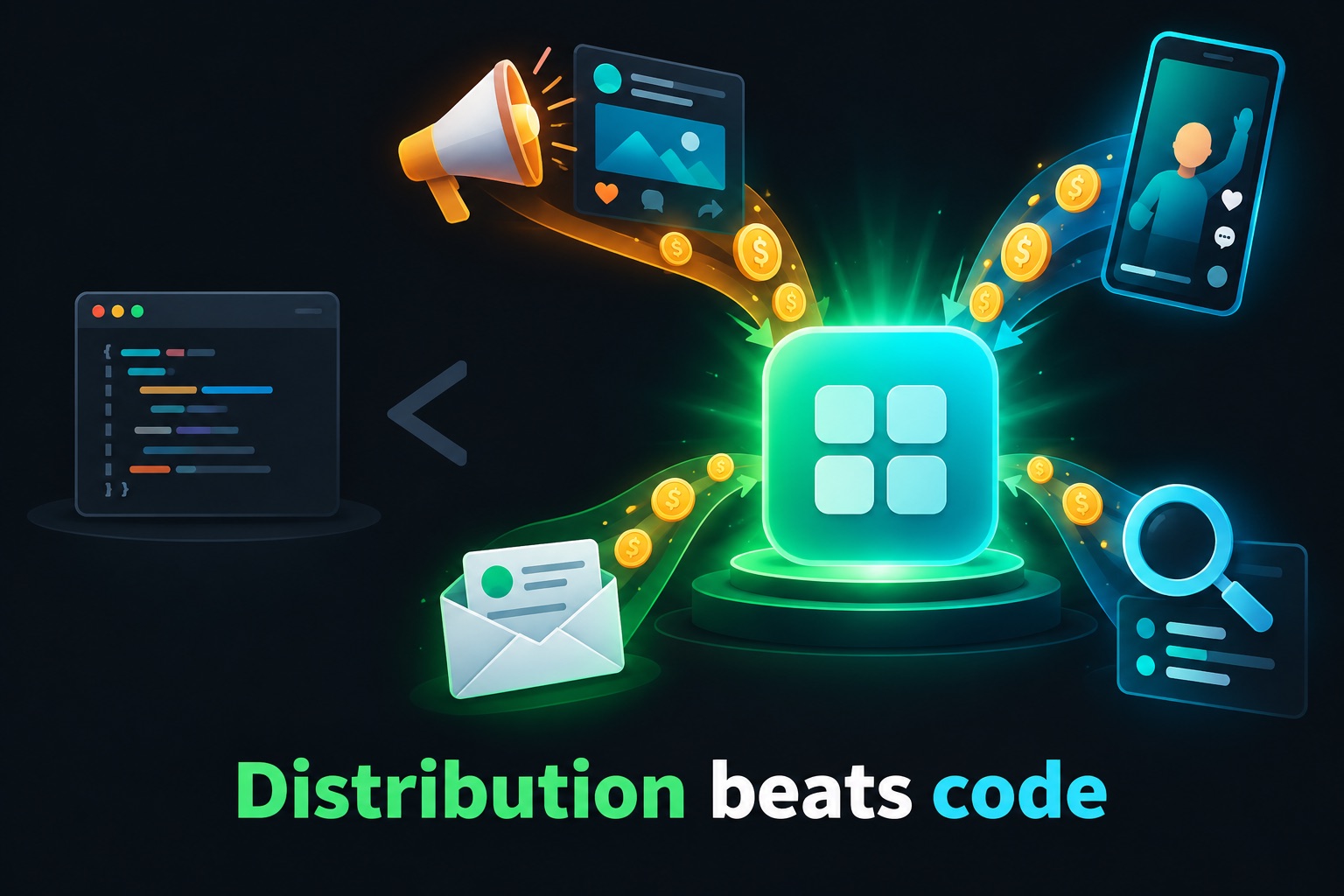
- Distribution did the heavy lifting. GeoSports grew from one post on X. Vix scaled TikTok accounts. Subscribr sold to an email list before building. Visualizee grew through SEO. In each case, the code was not the bottleneck.
- Three non-developers reported real revenue. Vix, Plinq and GeoSports were built by people who did not code before. Each started from an audience or a problem it knew well.
- Three apps changed how they charge. Visualizee went from one-time payments to subscriptions. Tarsi went from paid to free plus Pro. Subscribr went from lifetime pre-sales to monthly plans. Visualizee and Subscribr report revenue after the change; Tarsi's figure predates it.
- A price is not proof. Four apps show a price but no revenue: Wet Bulb Tracker, talat, FitWit AI and Cuneiform Chat. A live price shows the founder is asking. It doesn't show anyone paid.
Security takeaway of the week
Moltbook is the reminder. A Supabase "anon" key is meant to be public. It is only safe when Row Level Security (RLS, database rules that decide which rows each user can read or change) is switched on for every table. Without RLS, that public key opens the whole database. Check every table before launch: Supabase RLS for vibe coders.
Building something like these and want a second pair of eyes before real users arrive? Email [email protected] for a security audit of your vibe-coded app.
Key takeaway
The biggest earners this week did not have the best code. They had a way to reach buyers: a post, a list, a channel or a search term. Build fast with AI, then spend most of your time where your buyers already are.
Every case study so far, grouped by revenue: Vibe-coded apps making money. Security basics: Vibe coding security guide.
Sources
- Wet Bulb Tracker: /blog/wet-bulb-tracker-claude-code-case-study
- talat: /blog/talat-stack-breakdown-claude-code-tauri
- FitWit AI: /blog/fitwit-ai-vibe-coded-fitness-app-case-study
- Vix: /blog/vix-manifestation-first-users-tiktok
- Cuneiform Chat: /blog/cuneiform-chat-claude-code-case-study
- Moltbook: /blog/moltbook-supabase-leak-postmortem
- Personal Best: /blog/personal-best-5k-mrr-claude-code-case-study
- Payout: /blog/class-action-claims-app-security-checks
- Plinq: /blog/plinq-lovable-non-developer-revenue-case-study
- Tarsi: /blog/tarsi-pricing-codex-budget-app
- Visualizee: /blog/visualizee-8k-mrr-cursor-claude-code-case-study
- GeoSports: /blog/geosports-non-developer-claude-40k-month
- Subscribr: /blog/subscribr-30k-month-claude-code-case-study