Wrestle AI Made \$23K/mo: Vibe-Coded with Rork (Case Study)
September 29, 2026 · 1173 words
| Field | Detail |
|---|---|
| What it is | Wrestle AI: an iPhone app that analyzes wrestling match videos and gives technique feedback, drills and conditioning plans |
| Builder | George Lampropoulos, 18-year-old college freshman — non-developer |
| AI tool | Rork (AI builder for native mobile apps) |
| Stack | Rork, Supabase, OpenAI; a Fiverr freelancer set up payments and auth for about $250 |
| Time to launch | About 30 days |
| Revenue | $23K MRR and $131,863 total over 6 months — self-reported (Rork case study, Feb 2026). $17K MRR in Dec 2025 (Starter Story) |
| Pricing | $9.99/month or $59.99/year; 3-day free trial on the yearly plan |
| Source | Rork case study |
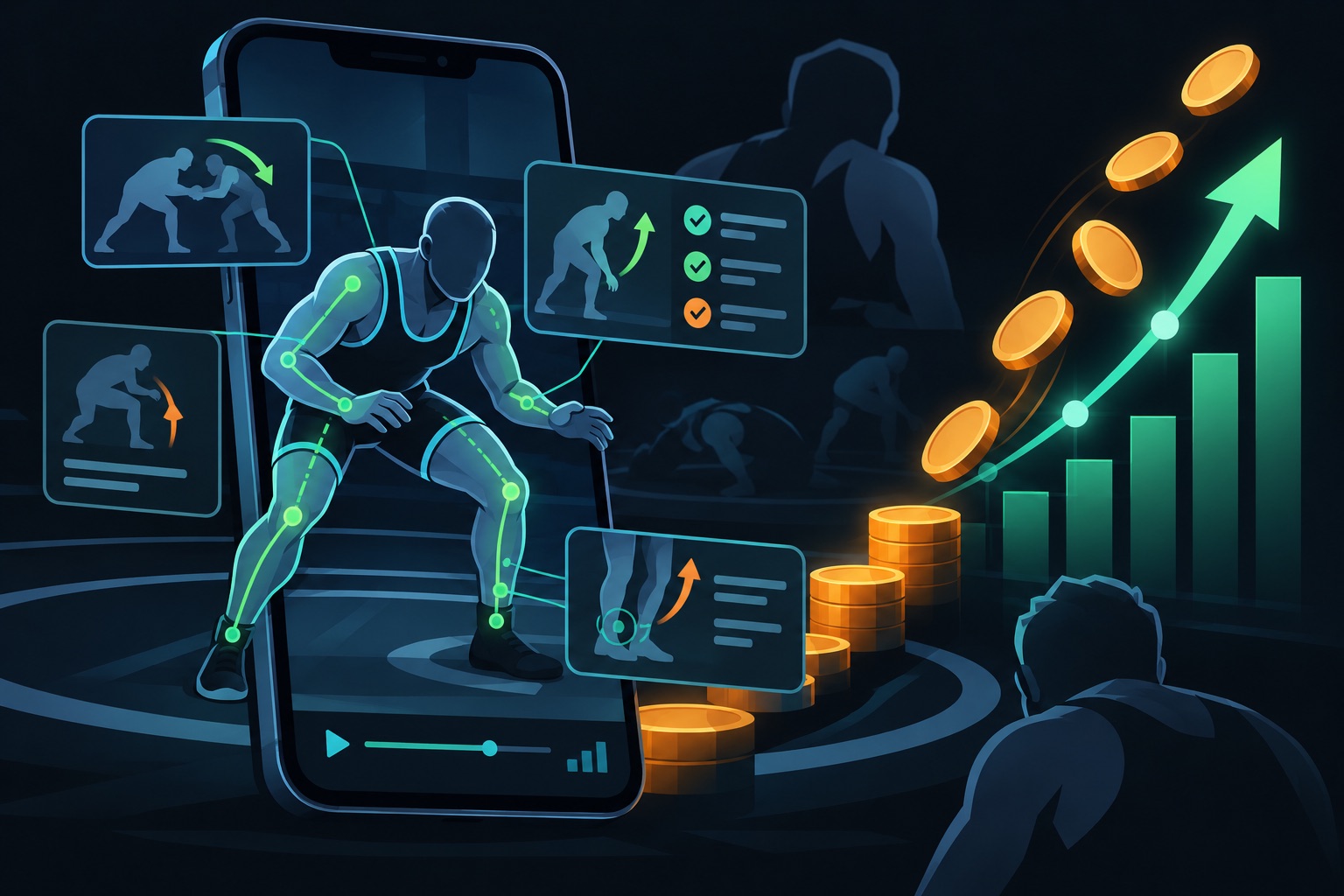
Wrestle AI reported $23K in monthly recurring revenue (MRR, the subscription income that repeats each month). It made $131,863 in its first six months, according to a February 2026 case study on Rork's blog. The builder, George Lampropoulos, was an 18-year-old college freshman. He built it with Rork, an AI tool that turns prompts into native phone apps.
One line from the case study sums up his starting point: "I literally don't know how to code at all."
The core point of this teardown: a narrow niche, a paywall placed after the "wow" moment, and paid influencer deals did more than code quality ever could.
The problem it solves
Wrestlers want coaching feedback, but a good coach is not always watching. Wrestle AI lets an athlete upload a clip of a match. The app analyzes it and returns technique notes, drills and conditioning plans.
The niche is small and passionate. That matters. A tight community means one trusted voice can reach most of your buyers at once. George later built a sister app, Fight AI, for MMA using the same idea.
This was not his first try. At 15, he worked on a self-improvement social app with a co-founder. They gathered 10,000 followers before launch, then hired three development agencies. It took a year and a half, momentum died, and the money ran out.
How it was built
This time he skipped agencies. He found Rork and went from idea to the App Store in about 30 days.
The stack is short:
- Rork generated the app itself.
- Supabase, a hosted database with user accounts built in, stores the data.
- OpenAI powers the video analysis and coaching text.
- A Fiverr freelancer wired up payments and authentication (login) for about $250.
That last line is the most honest part of the story. The one piece he paid a human for was the part that touches money and accounts. Total spend was about $1,100, and running costs stay under $150 a month, per Rork. Starter Story put the monthly cost at about $125.
How it makes money
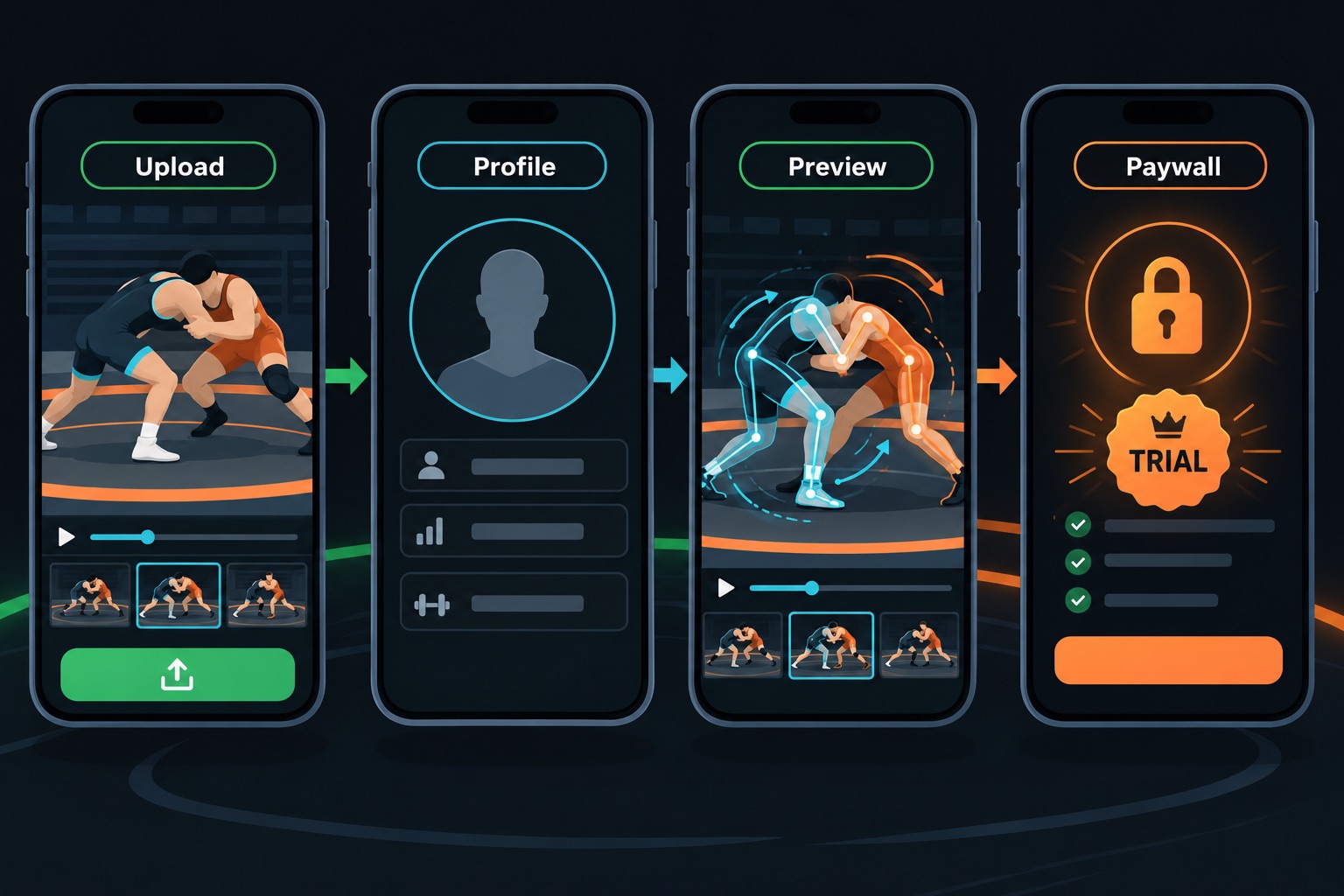
Wrestle AI uses a hard paywall. That means you cannot use the core feature without starting a subscription. Rork lists $9.99 a month or $59.99 a year, with a 3-day free trial on the yearly plan only. The UK App Store lists £9.99 monthly, £59.99 yearly and a £29.99 "Discount Yearly" option.
The paywall timing is deliberate. The case study says it appears after users upload a video, set up a profile and see a preview. By then, the user has felt the value. Starter Story describes the onboarding as copied from top-grossing apps: educate, personalize, create urgency, then show the paywall.
There is a trade-off. One UK App Store review complains there is no way to close the upgrade screen and use the app for free. Hard paywalls convert well, but they also draw that kind of review.
Yearly plans matter here too. Rork reports a peak month of $39,400 once annual subscriptions landed. Annual plans bring cash in early, which helps a solo builder fund more marketing.
How the first users came
Marketing was influencer-first. According to Rork, George sent more than 100 cold DMs a day to creators. His rule was simple: a promo post must not look like an advertisement.
A partnership with a major wrestling creator drove pre-orders. On launch day, the app hit #18 in its App Store category. Later, a $350 deal with a kickboxer lifted revenue from $500 to $1,800 a month.
Starter Story adds the method. He pitched paid promos, offered 20–50% upfront for a video package, and set view guarantees based on CPM (cost per thousand views). About 2 million impressions produced 17,000 downloads.
What to copy
- Pick a niche with one trusted voice. A single creator can reach most buyers in a small sport.
- Put the paywall after the aha moment. Let users upload, set up and see a preview first.
- Pay a human for the risky 10%. Payments and login are where mistakes cost real money.
- Treat influencer deals like ads with math. Agree on views and price per thousand before you pay.
- Push annual plans. They pull revenue forward.
If you vibe-code this
An app that stores user-uploaded videos and calls a paid AI API has predictable weak spots. Check these before launch:
- Make the video bucket private. Uploaded match footage should never sit behind a public URL. See Supabase storage bucket security.
- Turn on Row Level Security (RLS). RLS is Supabase's rule layer that decides which rows each user can read. See Supabase RLS for vibe coders.
- Keep the OpenAI key off the phone. Anything bundled in a mobile app can be extracted. Call the model from a server function. See environment variables and React Native secure storage.
- Check the subscription on the server. Before running an expensive analysis, confirm the user actually pays.
- Limit upload size and file type. See file upload security.
A storage policy that lets each user read only their own folder:
create policy "Users read own videos"
on storage.objects for select
to authenticated
using (
  bucket_id = 'match-videos'
  and (storage.foldername(name))[1] = (select auth.uid()::text)
);
Building an upload-and-analyze app and want someone to check storage, keys and paywall logic? Email me at [email protected] for a security audit.
Key takeaway
Wrestle AI shows that a non-coder with an AI builder can reach real revenue fast. The code took a month. The money came from niche focus, paywall timing and disciplined influencer deals.
More case studies: vibe-coded apps making money. Before you launch: the vibe coding security guide.