How NetDoctor Was Vibe-Coded with Bolt: Stack, Pricing, First Users
October 7, 2026 · 1217 words
| Fact | NetDoctor |
|---|---|
| What it is | Argentine telehealth marketplace: video consultations with psychologists, psychiatrists, nutritionists and doctors |
| Builder | Solo founder Martin F.; 20 years in healthcare sales; prior coding experience not stated |
| AI tool | Bolt.new |
| Stack | Supabase, Netlify, Zoom (video, via OAuth), Mercado Pago (payments) |
| Time to launch | 3 months to MVP |
| Revenue | Not disclosed. Model: 5% commission on completed consultations (pricing only, per Bolt's customer story) |
| Traction | 90 approved providers, 10 in review, 50 patients, three months after launch (self-reported) |
| Source | Bolt customer story |
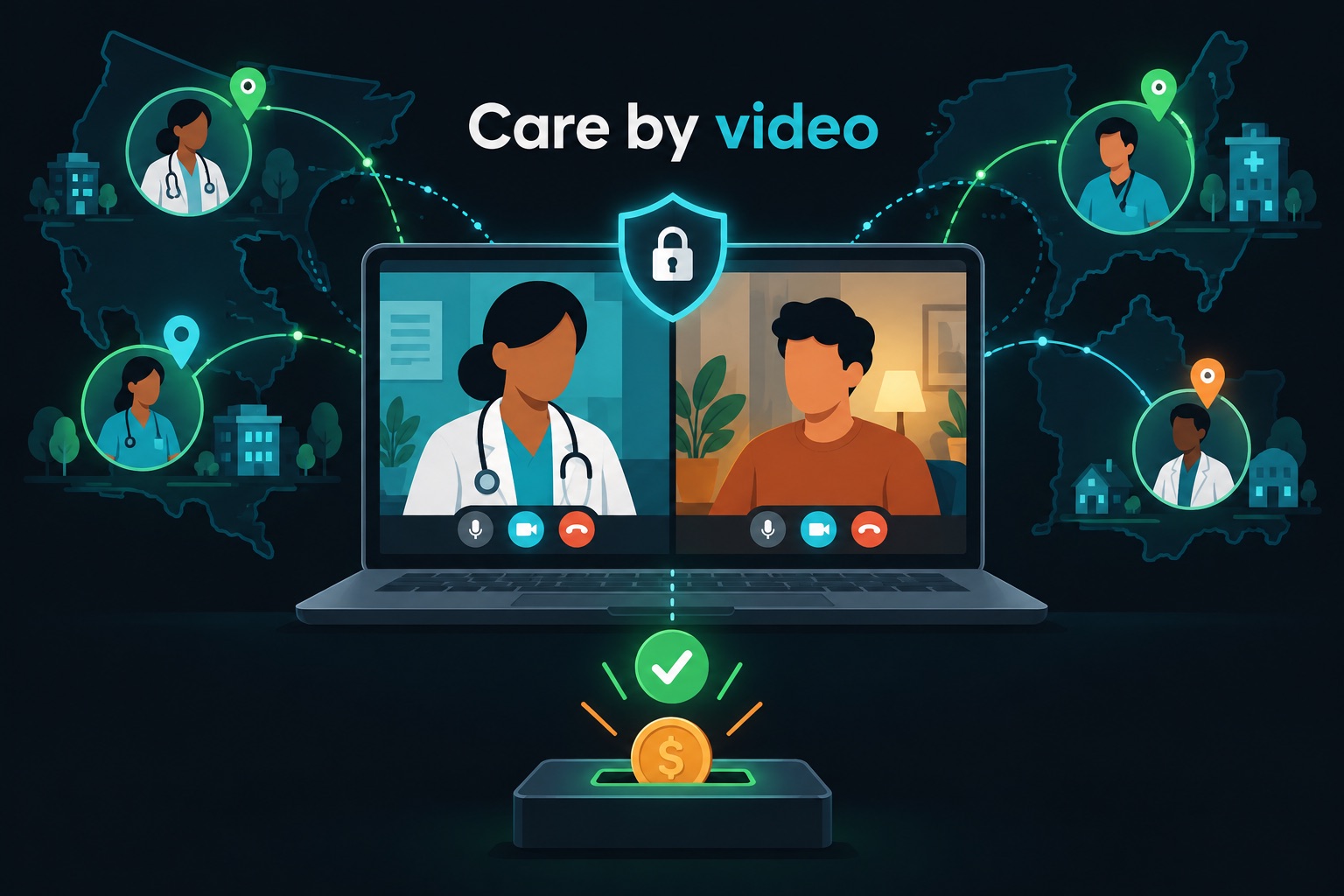
NetDoctor connects patients across Argentina with licensed psychologists, psychiatrists, nutritionists and doctors over video. Three months after public launch it had 90 approved providers and 50 patients. Its founder built it alone, in three months, with Bolt.new, an AI tool that builds full web apps from chat prompts in your browser.
Revenue is not disclosed. The business model is: providers pay a 5% commission on each completed consultation.
The story comes from a customer story on Bolt's own blog, published in August 2026. Keep that in mind: it is a vendor telling a customer's story. The one point: in a regulated field, the founder's domain knowledge did more work than the AI did.
The problem it solves
In Argentina, medical specialists cluster in a handful of capital cities, and patients often travel hours to see one. If you live elsewhere, finding a psychologist or nutritionist can be hard.
NetDoctor is a marketplace. Providers set up a virtual practice. Patients book and pay online, then meet over video. The homepage promises protected payments and secure video calls.
The founder, Martin F., knew this world before he wrote a prompt. He spent 20 years in healthcare sales at his father's medical wholesale company. He also holds a journalism degree and a master's in technology and informatics, and has studied nursing. The Bolt story doesn't say whether he coded before.
How it was built
Martin worked alone for about three months, from his first Bolt session to a shipped MVP. MVP means minimum viable product: the smallest version real users can pay for.
Inside Bolt, he switched between AI models by task. He used lighter models to rough out scaffolding (the basic structure of pages and data). He used heavier ones to optimize the parts that mattered most. That is a good habit on any credit-based AI tool: cheap models for boilerplate, strong ones for tricky logic.
The stack, as described in the story:
- Supabase for the database and backend. Bolt's piece notes it is SOC 2 certified and supports HIPAA workloads. Those are US security and health-privacy standards.
- Netlify for hosting.
- Zoom for video, connected with OAuth (a secure "log in with Zoom" permission flow). The story says the integration passed Zoom's marketplace review.
- Mercado Pago, Latin America's big payment provider, for payments.
The story doesn't describe where he got stuck. It does include his warning about the field: "There's not a lot of room for mistakes here."
How it makes money
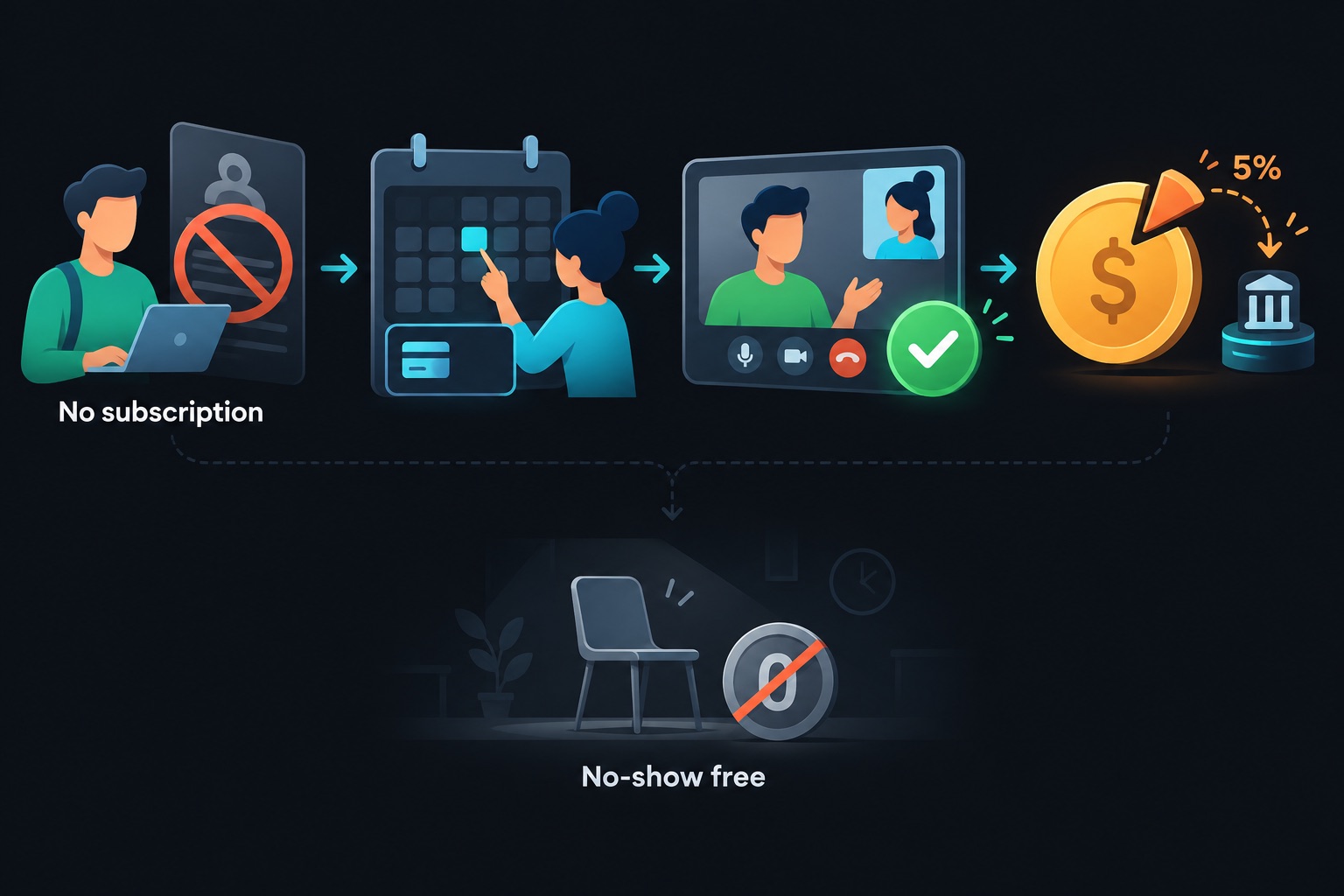
The model is simple:
- No subscription for providers.
- 5% commission on each completed consultation.
- No-shows cost the provider nothing.
This model comes from Bolt's story only. NetDoctor's public site doesn't show it, so we couldn't confirm it there (unconfirmed).
That fits a two-sided marketplace. Providers pay only when they earn, so it's easy to say yes. The platform's income grows with booked sessions, not sign-ups.
Two caveats. First, consultation prices aren't shown on the public homepage, so revenue can't be estimated. Second, 50 patients is early. At 5% commission, the platform needs a lot of sessions before it pays the bills. That's my read, not a claim from the story.
How it got its first users
Marketplaces have a chicken-and-egg problem. Patients won't come without providers, and providers won't join without patients.
Martin started with the supply side. He posted once on an Argentine job board, inviting providers to open a virtual practice. By Bolt's account, that single post drew almost 2,000 views and more than 100 applications in the first week.
Then he slowed things down on purpose. Every provider goes through manual credential review. The story says this has already caught applicants who were not providers at all.
Three months after launch, the count was 90 approved providers, 10 more in review and 50 patients.
What to copy
- Pick a field you already know. His 20 years in healthcare shaped the business model and the vetting process.
- Recruit the hard side first. In a marketplace, one job-board post for supply can beat months of ads for demand.
- Charge on success. A small commission on completed work removes the provider's risk.
- Verify by hand while you're small. Manual checks don't scale, but they build trust early.
- Match the model to the task. Use cheaper AI models for scaffolding and stronger ones for critical logic.
If you vibe-code this
NetDoctor is the example here, not an audit subject. For any telehealth or booking marketplace with video and payments, I'd check:
- RLS on appointments and notes. Row Level Security should let a patient see only their bookings and a provider only their patients. See Supabase RLS.
- Private buckets for credential documents. License scans and ID uploads must never be public. See storage buckets and file uploads.
- Verify payment webhooks. Confirm the payment provider's signature before marking a session paid. See webhook security.
- Hand out video links only to the two participants. Generate them on the server after checking who is asking. See IDOR authorization.
- Keep Zoom and payment secrets server-side. See environment variables.
A starting point for appointment access rules in Supabase:
alter table appointments enable row level security;

create policy "patient or provider can read"
on appointments for select
using (auth.uid() = patient_id or auth.uid() = provider_id);

create policy "patients book for themselves"
on appointments for insert
with check (auth.uid() = patient_id);

-- No update/delete policies: status changes (paid, completed)
-- happen in server code, e.g. after a verified payment webhook.
Building an app that handles health data? I review vibe-coded Supabase apps for data-access and upload issues. Email [email protected] with your stack.
Key takeaway
NetDoctor shows that one founder with deep domain knowledge can ship a regulated marketplace on Bolt in three months. The AI built the app; his experience chose the business model, the first channel and the manual vetting.
More case studies: Vibe-coded apps making money · The security checklist: Vibe coding security
Sources
- Bolt blog, "How NetDoctor Shipped a Telehealth Platform Solo in 3 Months" by Taylor Bornstein (August 23, 2026): https://bolt.new/blog/netdoctor-telehealth-story
- NetDoctor homepage: https://netdoctor.app/