WatchBridge Makes \$49/mo: Vibe-Coded with Claude Code (Case Study)
October 7, 2026 · 1196 words
| Fact | WatchBridge (formerly TvRecommendationBridge) |
|---|---|
| What it is | Android TV utility that sends Google TV and Fire TV recommendation clicks to the player app you choose |
| Builder | Solo maker "yus33"; coding background not disclosed |
| AI tool | Claude Code (implementation "mostly AI-written") |
| Stack | Android TV app; TMDB for title lookup; distributed as a GitHub release APK and via Google Play closed testing. Other layers not disclosed |
| Time to launch | Under 3 weeks |
| Revenue | $49/month shown on Indie Hackers (self-reported) |
| Pricing | €4.99 one-time for up to 5 devices; 2-day free trial, no card (pricing page) |
| Source | Indie Hackers post |
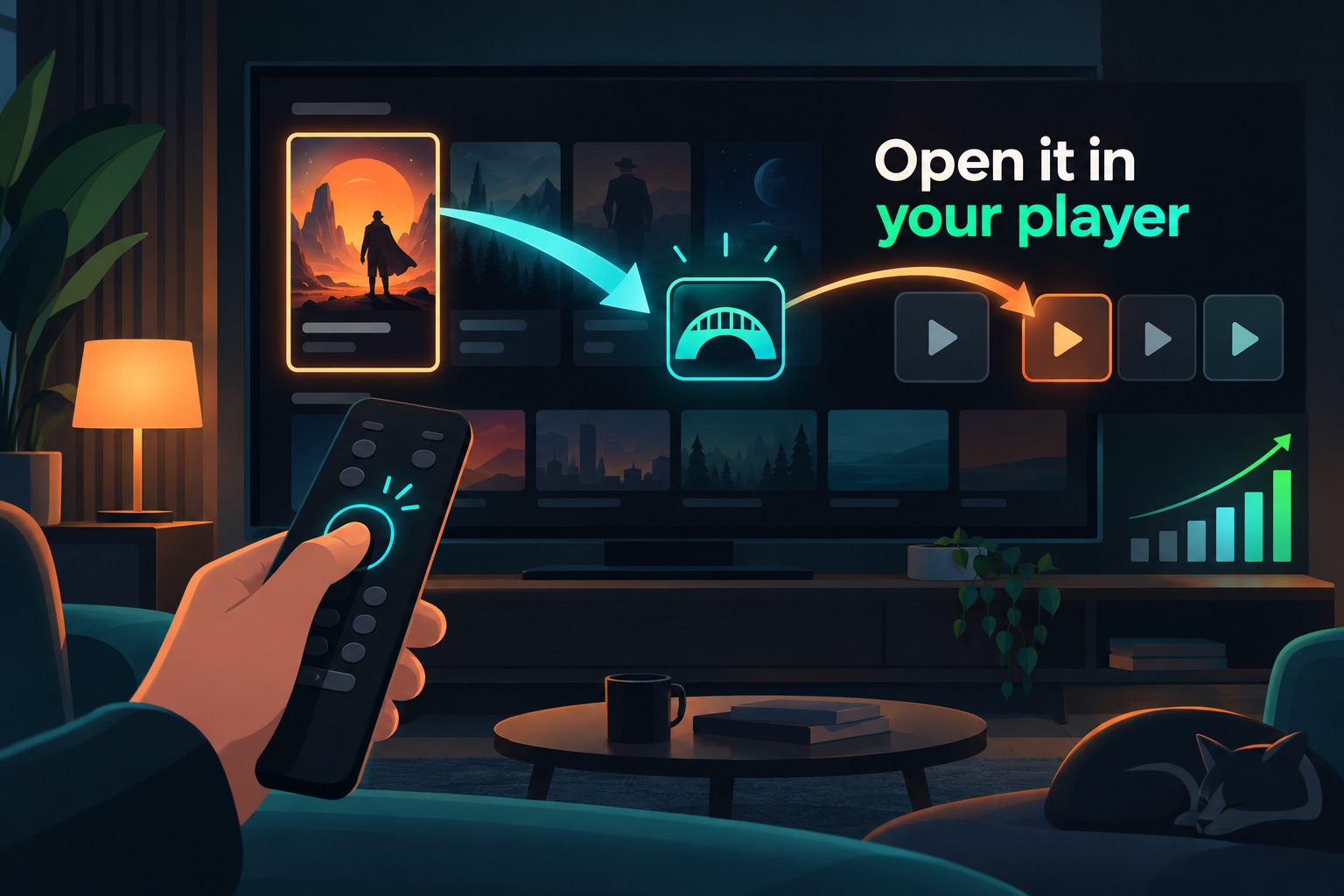
WatchBridge is a small Android TV app that shows $49 a month in revenue on its Indie Hackers page. The figure is self-reported. The maker, who posts as yus33, shipped it in under three weeks. Most of the code came from Claude Code, Anthropic's AI coding agent that edits files and runs commands in your project.
It costs €4.99, once. No subscription.
$49 a month is not a salary. But it is real money from strangers, for a fix to one annoying problem. The one point: a narrow, painful problem plus a fair one-time price is enough to get your first paying users.
The problem it solves
Google TV's home screen recommends movies and shows. Click one, and it often opens in an app you don't use.
That was yus33's own frustration. They watch through players like Stremio, Nuvio or Plex. The launcher kept sending them somewhere else.
WatchBridge sits in the middle. It catches the recommendation click, works out which title it is, and opens it in your chosen player. The site lists six supported players: Nuvio, Stremio, Plex, Jellyfin, WuPlay and Wholphin.
It works on Google TV devices and on Fire TV. Title matching uses TMDB, a public movie and TV database.
The app started as a redirect tool called TvRecommendationBridge. It has since been renamed WatchBridge and grew extra features: a watchlist, viewing history, continue-watching, next-episode alerts and a referral program.
How it was built
The Indie Hackers post is candid about the split. "I built almost all of this with Claude Code."
The maker describes their own role as three jobs:
- Product and pricing decisions.
- Real-device testing. They test on a TCL TV, which is aggressive about killing background apps.
- Catching what's broken. The AI writes; the maker checks whether it actually works on a TV.
That split is worth noticing. TV apps are hard to test in an emulator (a fake device on your computer). Background-app limits, remote-control focus and launcher quirks differ by brand. The human job here is mostly "try it on the real thing."
The post does not list a full stack, backend or payment provider. I won't guess.
How it makes money
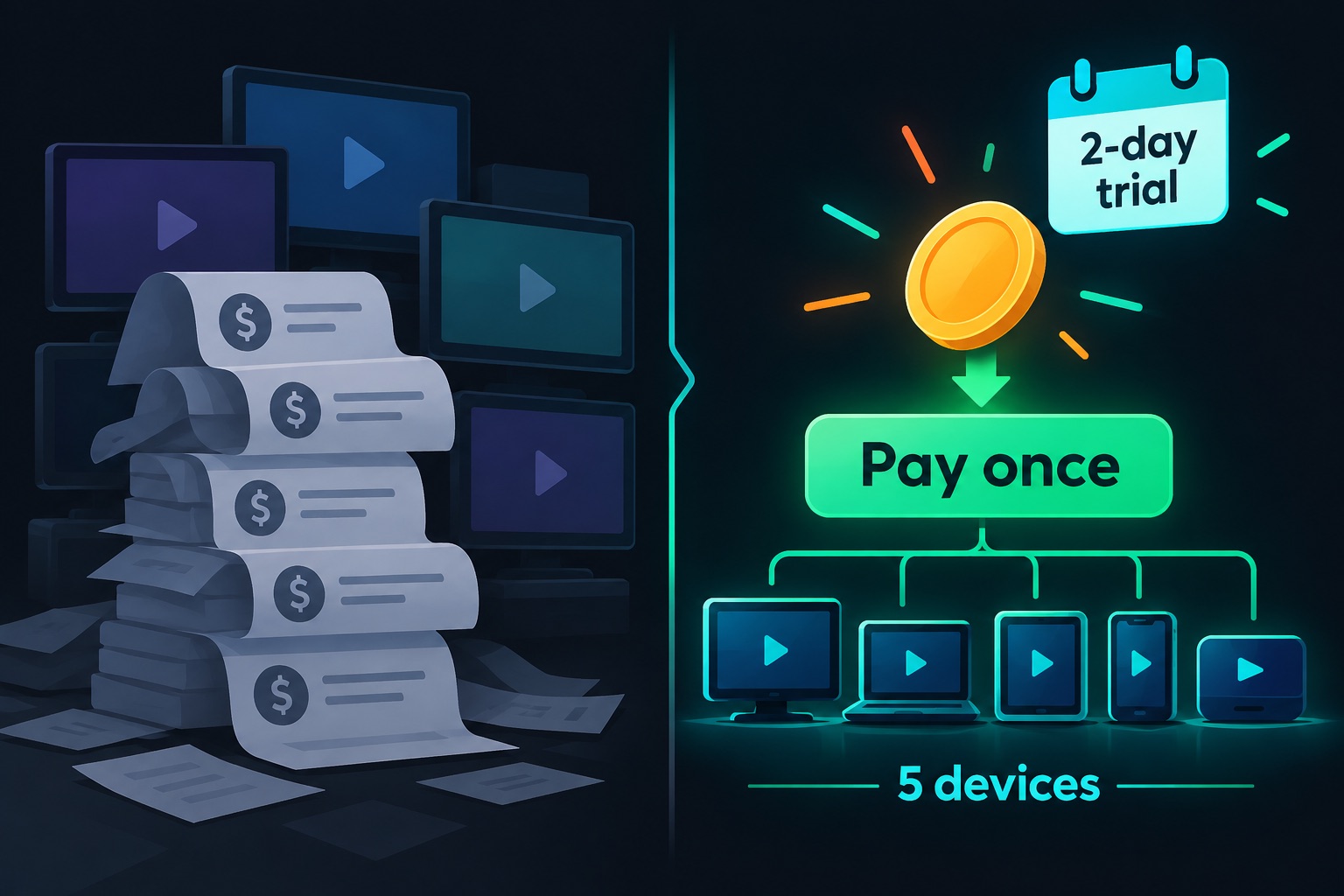
The pricing page is simple:
- €4.99, one-time. One payment covers up to five devices.
- 2-day free trial. Full features, no card required.
Why not a subscription? Their reasoning, in short: people already pay for several streaming services. They didn't want to add one more recurring charge for a helper app.
A one-time price fits a utility. It fixes one annoyance; people don't expect to pay for it monthly. It also removes a reason to hesitate at checkout.
Rough math: at €4.99 a sale, $49 a month is on the order of eight to ten sales. That is my estimate, not their figure.
They also say they have no conversion data yet. They suspect the original redirect fix still drives most purchases, not the newer watchlist features.
How it got its first users
Distribution was plain and fast:
- Subreddits. The maker posted to several. They got real engagement and real pushback, some about using AI to build it and some about charging at all.
- GitHub releases. The APK (the Android install file) is downloadable from GitHub.
- Google Play closed testing. A second install path, while it isn't fully public on Play.
- A referral program. Referrals earn trial extensions, and 10 paid referrals earn a lifetime license.
The site also documents three ways to sideload (install outside the store): the Downloader app, a file-sending app, or ADB from a computer.
What to copy
- Solve your own daily annoyance. They built the fix they wanted on their own TV.
- Price like a utility. One small one-time payment for a one-job app.
- Offer a trial without a card. Two days is enough to see if it works on your device.
- Be open about AI use and expect some pushback. They shared how they built it and kept going.
- Add tracking before adding features. They shipped new features without knowing which one sells. Measure first.
If you vibe-code this
WatchBridge is the example here, not an audit subject. For any sideloaded Android app that uses powerful permissions and sells licenses, I'd check:
- Sign your releases and publish checksums. Users download your APK from GitHub. Protect the signing key and your GitHub account with 2FA. See supply chain security.
- Scope Accessibility access tightly. The Accessibility API can read what is on screen. Limit it to the launcher package and the events you need.
- Store license tokens securely. Use the Android Keystore or encrypted storage, not plain preferences. See secure storage on mobile.
- Keep third-party API keys off the device. Anything in an APK can be extracted. Proxy calls like TMDB through a server with rate limits. See environment variables and rate limiting.
An Accessibility config that only listens to clicks from one launcher:
<!-- res/xml/accessibility_service_config.xml -->
<accessibility-service xmlns:android="http://schemas.android.com/apk/res/android"
    android:accessibilityEventTypes="typeViewClicked"
    android:packageNames="com.google.android.apps.tv.launcherx"
    android:accessibilityFeedbackType="feedbackGeneric"
    android:canRetrieveWindowContent="true"
    android:notificationTimeout="100" />
Selling an app people install outside the store? I review vibe-coded apps for release, license and key-handling issues. Email [email protected] with a link.
Key takeaway
WatchBridge's reported $49 a month is small, but the recipe is repeatable. Pick one daily annoyance, let Claude Code write the code, test on real hardware yourself, and charge a small one-time fee.
More case studies: Vibe-coded apps making money · The security checklist: Vibe coding security
Sources
- Indie Hackers, "Built and shipped an Android TV app in under 3 weeks, priced as a one-time payment instead of a subscription" (September 3, 2026): https://www.indiehackers.com/post/built-and-shipped-an-android-tv-app-in-under-3-weeks-priced-as-a-one-time-payment-instead-of-a-subscription-K5AhnG8UWAsoIBZN9ult
- Indie Hackers product page, TvRecommendationBridge: https://www.indiehackers.com/product/tvrecommendationbridge
- WatchBridge site and pricing: https://yushetf33.github.io/WatchBridge/