How Learnprints Was Vibe-Coded with Lovable: Stack & Pricing
October 7, 2026 · 1244 words
| TL;DR | |
|---|---|
| What it is | A "learning OS": turns a topic or document into a structured study plan, with an AI tutor, flashcards and practice feedback |
| Builder | Solo founder, 25, working full-time at a family cabinetry company (coding background not disclosed) |
| AI tool | Lovable, Cursor, Claude (Opus and Sonnet), a bit of Codex |
| Stack | React frontend; Supabase (Postgres + Edge Functions); GPT-5.2, GPT-4o-mini, LlamaParse and other AI services |
| Time to launch | 9 months of nights and weekends, about $2,500 budget |
| Revenue | Not disclosed (pricing only: founder-stated launch price of $15/month CAD) |
| Source | Show HN, March 3, 2026 |

Nine months of nights and weekends. About $2,500 spent. One person with a full-time job at a family cabinetry company.
That's how Learnprints got built. It's an AI study app, launched at $15 a month (Canadian dollars), with a public goal of 10 paying users in 30 days. Revenue hasn't been disclosed, so this teardown covers the build, the price and the launch plan.
The one point of this post: a small, specific revenue goal is the best first milestone for a vibe-coded app, and the price should be justified in the buyer's own terms.
The problem it solves
Online courses are rigid. Chatting with an AI about a topic is unstructured. Learnprints tries to sit in between.
You give it a topic, a document or an assignment. It builds a "blueprint," a map of the key concepts and how they connect. Then it adds study tools around that map:
- An AI tutor you can ask about any chapter.
- Spaced repetition, a flashcard method that shows you each card just before you'd forget it.
- A practice room with Socratic hints, meaning the tutor asks guiding questions instead of giving answers.
- Vision feedback, where the AI looks at your work on a canvas and comments on it.
- Reflection tools to plan and check your own learning.
The site also offers English and French, plus PDF and HTML export.
The founder's reason is personal: to give everyone the study tools they needed back in school.
How it was built
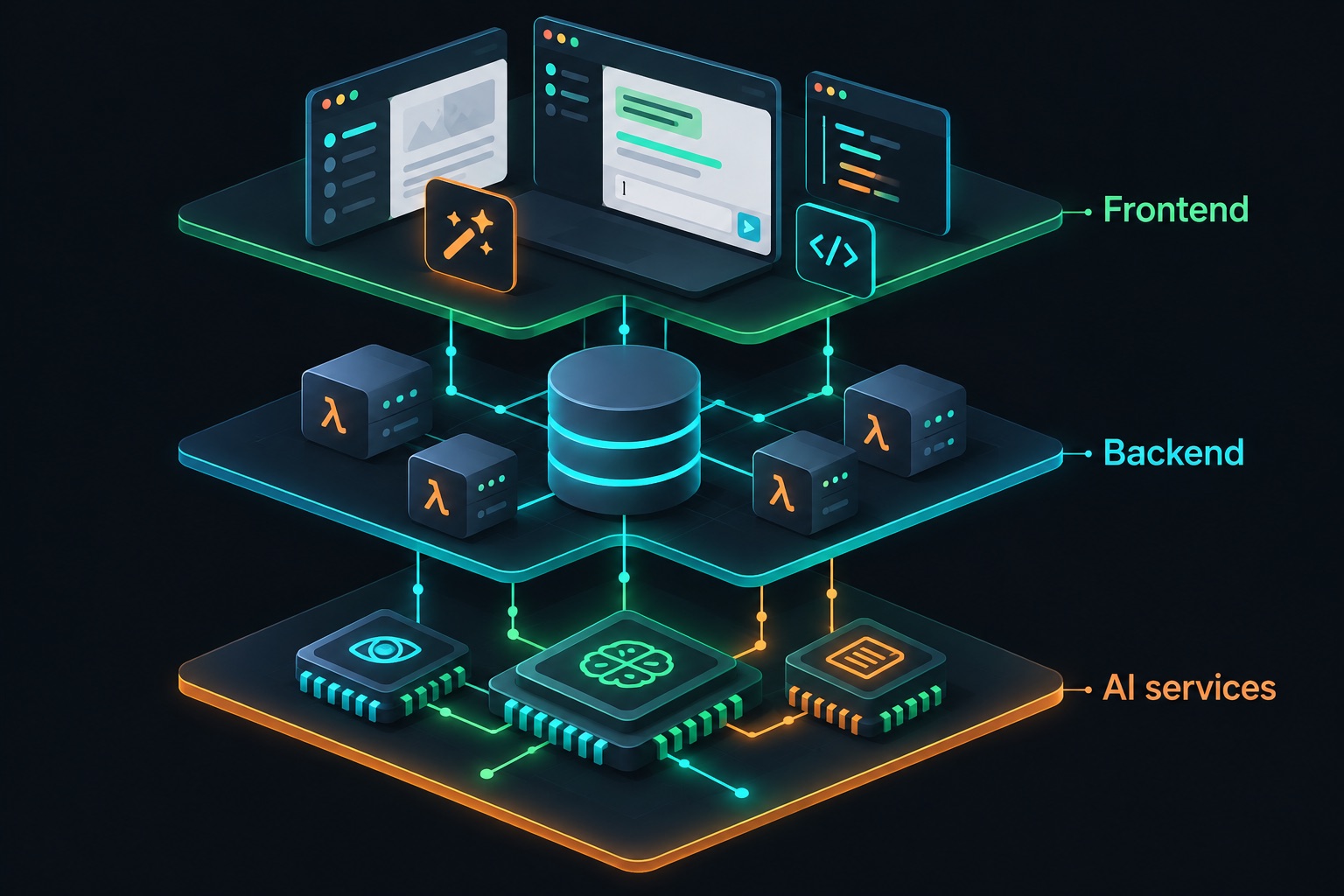
The founder listed the stack in the Show HN post:
- Frontend: Lovable, Cursor and Claude (Opus and Sonnet), plus a bit of Codex. The founder calls it "AI-assisted React." Lovable is a browser tool that generates whole apps from prompts. Cursor is a code editor with AI built in. React is the JavaScript library the interface is written in.
- Backend: Supabase, with Postgres (the database) and Edge Functions (small server functions). Supabase gives you a database, logins and file storage without running your own server.
- AI services: GPT-5.2 for vision and tutoring, GPT-4o-mini for tutoring and structuring, and LlamaParse to read uploaded documents.
The tool mix is typical of a 9-month build. Lovable is fast for getting screens up. Cursor and Claude give more control once the app outgrows what prompts alone can manage.
The budget is the other lesson. About $2,500 over nine months is cheap for a feature-heavy product, but it's real money for a side project.
How it makes money
The launch price was a single plan: $15 a month, CAD. That's roughly the cost of a couple of coffees, and far less than an hour with a human tutor.
The founder defended the price in a comment:
"If it doesn't save you more than $15 in tutoring or wasted study time it's not doing its job." — Jessyabc on Hacker News
That line is the best part of this case study. It prices the product against what a student already spends: tutoring and wasted hours. It doesn't price it against other apps.
One caveat. The site has a live pricing page, but I couldn't read the prices on it. So $15 CAD is the founder's stated launch price, not a number I could confirm on the site today.
First users
The goal was public: 10 paying users in 30 days. The founder hasn't shared whether it was hit.
The HN post itself got little attention, with one point and one comment, the founder's own. That's normal for Show HN. Most posts sink quietly.
The site today offers demo access, so visitors can try it before paying. There are no public user counts or testimonials.
What to copy
- Set a small, public revenue goal. "10 paying users in 30 days" is concrete. You'll know on day 30 whether it worked.
- Price against the alternative. Compare your price to a tutor, an agency or an hour of the user's time, not to other apps.
- Mix tools by stage. Use a builder like Lovable to get screens fast, then move to Cursor or Claude for control.
- Track your total spend. Knowing it cost $2,500 tells you how many $15 customers you need to break even: about 167 paying months, by my rough estimate (ignoring currency and fees).
- Offer a demo. Let people see the core loop before any payment screen.
If you vibe-code this
An AI tutor app on Supabase that accepts uploaded documents and images has a few classic weak spots. These are checks for the app type, not claims about Learnprints.
- Turn on row-level security for every table. Row-level security (RLS) makes sure each student only sees their own notes and progress. See Supabase RLS for vibe coders.
- Keep uploads private and per user. Practice images and documents belong in a private bucket with policies. See Supabase storage bucket security and file upload security.
- Keep AI keys in Edge Functions. Never ship OpenAI or LlamaParse keys to the browser. See environment variable security.
- Expect prompt injection in uploads. A document can contain hidden instructions for your tutor. See prompt injection.
Here is a Supabase storage policy that keeps each user's uploads in their own folder:
-- Files are stored as practice/<user_id>/<file>
create policy "users manage their own practice uploads"
on storage.objects for all
to authenticated
using (
  bucket_id = 'practice'
  and (storage.foldername(name))[1] = auth.uid()::text
)
with check (
  bucket_id = 'practice'
  and (storage.foldername(name))[1] = auth.uid()::text
);
Built an AI study app with Lovable or Supabase? Email me at [email protected] for a security audit of your RLS and storage rules.
Key takeaway
Learnprints is what a patient, part-time vibe-coded build looks like: nine months, a small budget and a lot of features. The smartest moves weren't technical. They were a clear price reason and a small, public goal.
More case studies: Vibe-coded apps making money · Security basics: Vibe coding security guide
Sources
- Jessyabc, "Show HN: Learnprints – a full learning OS I built solo on nights and weekends," Hacker News, March 3, 2026: https://news.ycombinator.com/item?id=47231918
- Learnprints homepage (checked September 2026): https://learnprints.ca
- Learnprints pricing page (checked September 2026; prices not readable): https://learnprints.ca/pricing