Creator Buddy Made ~\$25K/mo (2025): Vibe-Coded with Cursor (Case Study)
October 7, 2026 · 1400 words
| Fact | Creator Buddy |
|---|---|
| What it is | AI toolkit for X (Twitter) creators: content coach, algorithm analyzer, post composer, reply assistant, Chrome extension |
| Builder | Alex Finn; background described differently by different sources (see below) |
| AI tool | Cursor and Windsurf to build; ChatGPT for product planning; a later profile says Claude Code |
| Stack | Next.js on Vercel, Supabase, Resend (email), Claude and ChatGPT APIs |
| Time to launch | Prototype on day one; 6–7 months of beta before the public launch on January 24, 2025 |
| Revenue | ~$300K ARR and ~500 paying subscribers two weeks after the Jan 2025 launch; ~$25K/month as of the June 2025 episode (self-reported) |
| Pricing | One plan, $49/month, annual discount, 7-day free trial (pricing page) |
| Source | Starter Story episode summary |

Creator Buddy launched publicly on January 24, 2025. According to its founder, Alex Finn, it hit $100,000 in ARR within 15 minutes. ARR means annual recurring revenue: monthly subscription revenue times twelve. Two weeks later he reported nearly $300,000 ARR from about 500 paying subscribers. That is roughly $25,000 a month.
He built it with AI coding tools. The episode that tells the story is titled "I Built an App with Cursor and Made $100K on Launch Day."
The one point of this teardown: the code was fast, but the launch-day revenue came from an audience he had built for three years.
These are self-reported numbers from a Starter Story episode published in June 2025. They are not verified by a payments dashboard. I took them from a third-party summary of the episode and haven't confirmed them against the video itself. The story is also over a year old, so treat the figures as a snapshot.
The problem it solves
X creators want more reach. Most don't know why one post takes off and another dies.
Finn had a head start on that question. The episode says he led a team of technical consultants at MongoDB. (Another profile calls him a non-technical founder, so treat his background as unconfirmed.) On the side, he tracked his own tweets in spreadsheets to see what worked. He also grew an X audience by explaining X's open-source recommendation algorithm.
Creator Buddy turns that spreadsheet habit into a product. The homepage lists eight AI tools. Among them:
- an AI Content Coach that studies your post history and suggests what to write,
- an Algo Analyzer that rates a draft against the X algorithm,
- a Composer that repurposes one post into several,
- Reply Guy, for fast replies to bigger accounts,
- and a Chrome extension that brings the tools into X itself.
How it was built
Per the episode, Finn found Cursor in August 2024. Cursor is an AI code editor: you describe a change and it edits your files. He also used Windsurf, a similar editor. ChatGPT served as his product-management sidekick.
He had a working prototype on the first day. Then he spent six to seven months iterating with feedback before the public launch.
The stack is plain and popular with vibe coders:
- Next.js (a React framework) hosted on Vercel
- Supabase for the database
- Resend for email
- Claude and ChatGPT APIs for the AI features
A later Substack profile by John Ellison (January 2026) says Finn built it through Claude Code. It quotes him claiming zero lines written by hand. The two sources may describe different periods, and which tool did most of the work is unconfirmed. I'd keep Cursor as the launch-era tool.
His main coding advice from the episode: break every problem into the smallest possible steps when prompting AI. That avoids bugs and speeds delivery.
How it makes money
Creator Buddy has one plan. It costs $49 a month, with a cheaper annual option and a 7-day free trial. There is no free tier listed on the homepage.
A single plan keeps the launch message simple: one price, every tool. At $49, 500 subscribers works out to about $24,500 a month (my estimate, not his figure). That lines up with the ~$25K monthly figure he reported.
Costs are low for that revenue. The episode puts them at about $5,300 a month for hosting, data, email and AI API calls. It cites gross margins of around 80%. (Other profiles quote 90%, so the exact margin is fuzzy.)
How it got its first users
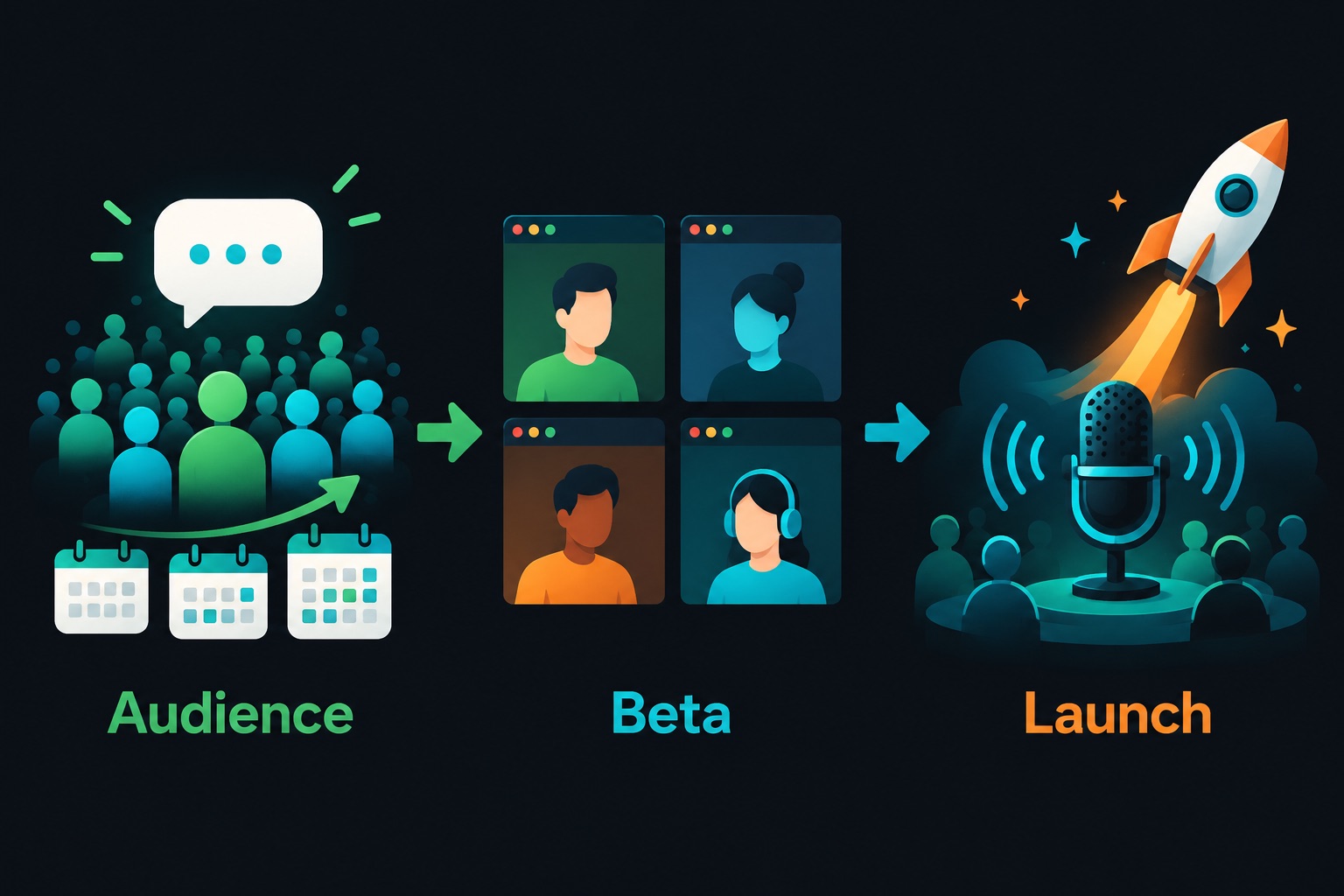
This is the part most vibe coders skip.
- Three years of audience building. Finn had already grown a large X following by explaining the algorithm. His buyers were his readers.
- A ~150-person beta. He met each beta subscriber individually to shape the product over those months.
- A live launch. On launch day he announced publicly and spent the day in X Spaces, X's live audio rooms, talking to people.
His own summary of the lesson: distribution and community are stronger moats than product or knowledge. A moat is whatever makes you hard to copy.
What to copy
- Build in the channel you already own. He sold an X tool to an X audience.
- Turn a manual habit into software. His spreadsheet tracking became the product.
- Run a long beta with real conversations. 150 one-on-one meetings is expensive, but it de-risks launch day.
- Keep pricing to one plan at first. You can add tiers after you learn who pays.
- Prompt in small steps. It is his clearest coding tip, and it works in any AI editor.
If you vibe-code this
Creator Buddy is the example here, not an audit subject. For any SaaS that analyzes social posts, calls AI APIs and ships a Chrome extension, I'd check:
- No API keys inside the extension. Anyone can unpack an extension and read its files. The extension should call your server, which holds the keys. See environment variables.
- Lock CORS to your extension and your site. CORS (the browser rule for which sites may call your API) should not be
*. See CORS configuration. - Per-user rate limits on AI endpoints. Every call costs you money. See API rate limiting.
- Treat other people's posts as untrusted input. Feeding third-party text into an LLM invites prompt injection. See prompt injection.
- RLS on saved posts and drafts. Users should only read their own rows. See Supabase RLS.
A server route that only answers your extension and your site, and only for signed-in users:
// app/api/compose/route.ts
const ALLOWED_ORIGINS = new Set([
  `chrome-extension://${process.env.EXTENSION_ID}`,
  "https://yourapp.com",
]);

export async function POST(req: Request) {
  const origin = req.headers.get("origin") ?? "";
  if (!ALLOWED_ORIGINS.has(origin)) {
    return new Response("Forbidden", { status: 403 });
  }
  // Origin checks are not auth: still require a real session.
  const user = await getUserFromSession(req); // your auth helper
  if (!user) return new Response("Unauthorized", { status: 401 });

  // Call the AI API here with a server-side key (process.env.ANTHROPIC_API_KEY).
  return Response.json({ ok: true });
}
Shipping an AI tool with an extension? I review vibe-coded Next.js and Supabase apps before launch. Email [email protected] with a link and your stack.
Key takeaway
Creator Buddy's reported launch-day revenue was not a coding feat. The AI editors made the build fast; three years of audience building and a 150-person beta made people pay on day one.
More case studies: Vibe-coded apps making money · The security checklist: Vibe coding security
Sources
- Starter Story episode summary, "I Built an App with Cursor and Made $100K on Launch Day" (June 7, 2025): https://www.bulletpointpodcast.com/starterstory/i-built-an-app-with-cursor-and-made-100k-on-launch-day
- Creator Buddy homepage and pricing: https://www.creatorbuddy.io
- John Ellison, "The vibe coding wave is here: 5 builders" (January 7, 2026): https://iamjohnellison.substack.com/p/the-vibe-coding-wave-is-here-5-builders
- Starter Story, Creator Buddy revenue profile: https://www.starterstory.com/businesses/creator-buddy/revenue