3AK Track Makes $13K/mo: Vibe-Coded with Rork (Case Study)
September 29, 2026 · 1238 words
| Field | Detail |
|---|---|
| What it is | iOS sprint and track training app: AI stride analysis, personalized plans, strength and nutrition tracking |
| Builder | Non-developer (two college track athletes, no coding experience before this) |
| AI tool | Rork (AI mobile-app builder); ChatGPT for debugging |
| Stack | Rork, RevenueCat for subscriptions, App Store. Supabase mentioned in one podcast summary only |
| Time to launch | About two weeks of building (podcast summary); launched January 2026 |
| Revenue | $13,343 MRR, $21,397 last 30 days, $144,587 all-time. Verified via TrustMRR (RevenueCat data, checked Sept 28, 2026) |
| Source | Rork case study, TrustMRR listing |
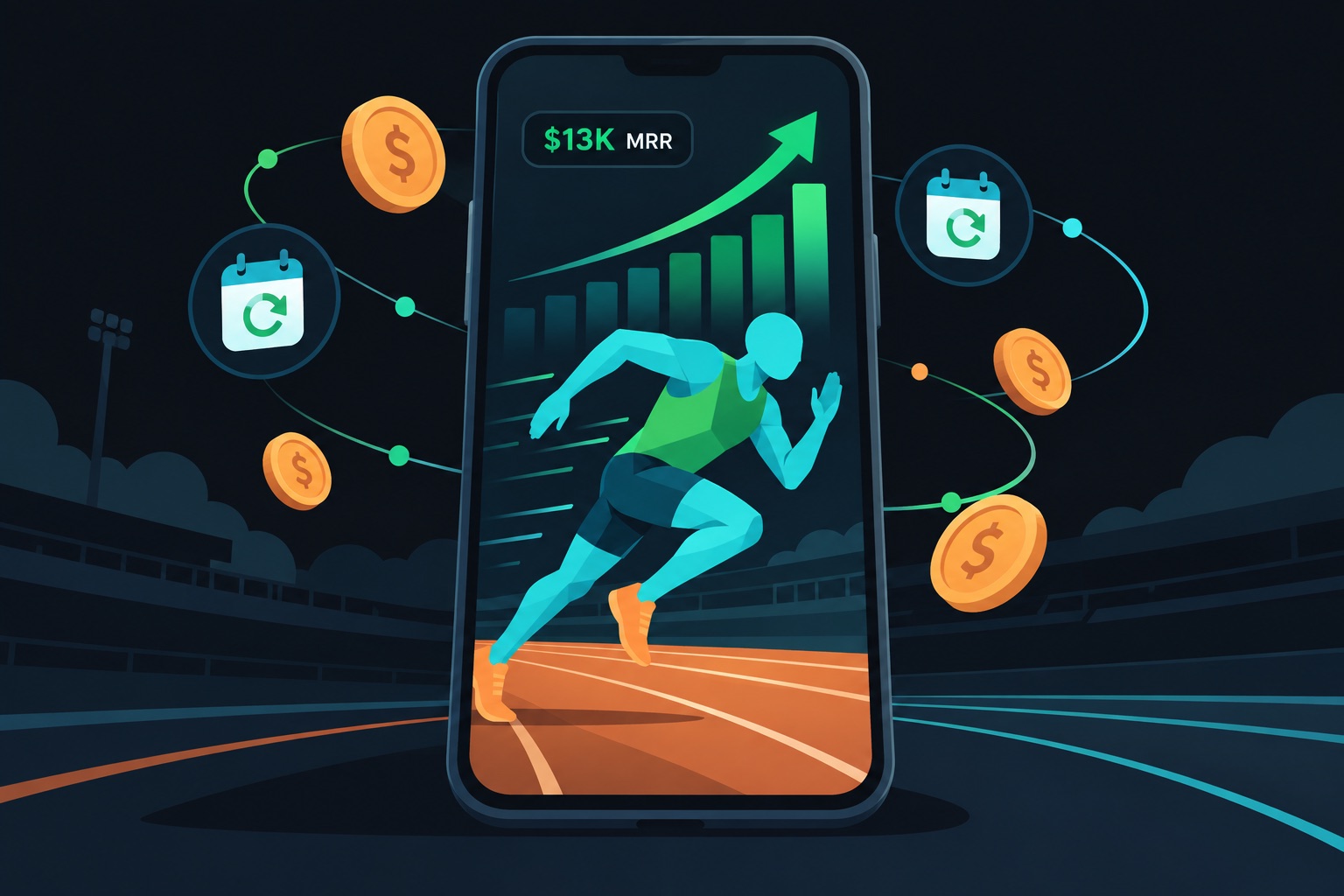
Two college sprinters who had never written code built a track-training app with Rork, an AI tool that turns plain-English prompts into mobile apps. As of September 28, 2026, TrustMRR shows $13,343 in monthly recurring revenue (MRR: subscription money that renews every month). It also shows $21,397 earned in the last 30 days and $144,587 all-time.
Those numbers are not screenshots. TrustMRR reads them directly from RevenueCat, the billing service the app uses for subscriptions. A second site, whatsthe.app, pulls the same kind of data and shows almost the same MRR: $13,207.
The one point of this case study: the app was the easy part. The audience came first.
The problem: athletes wanted a coach in their pocket
Braylin Byrd and Christian Rac were high-school teammates who both went on to run college track. According to Rork's case study, they had tried almost every side hustle first. The list includes dropshipping, day trading, cutting hair and a clothing brand.
What they did have was a training brand called 3AK. Rork counts more than 150,000 combined Instagram followers, with their top reel passing 118,000 likes. They also ran a Shopify store selling training programs.
The app turns that content into a product. The App Store listing (now titled "3AK Sprinting") promises 20 to 30 minute sprint workouts. It adds AI stride analysis, adaptive coaching, strength plans and nutrition tracking. It sits in the Sports category with a 4.8 rating from about 1,900 reviews.
How it was built
Rork's write-up says the whole app was built inside Rork with zero hand-written code. ChatGPT helped when they got stuck on bugs. The founders spent 8 to 10 hours a day learning the tool.
A Starter Story episode summary says the build took about two weeks. That summary also lists Claude, Supabase (a hosted database) and RevenueCat. Rork's own write-up doesn't mention Claude or Supabase, so treat those two as unconfirmed.
The app launched in January 2026.
How it makes money
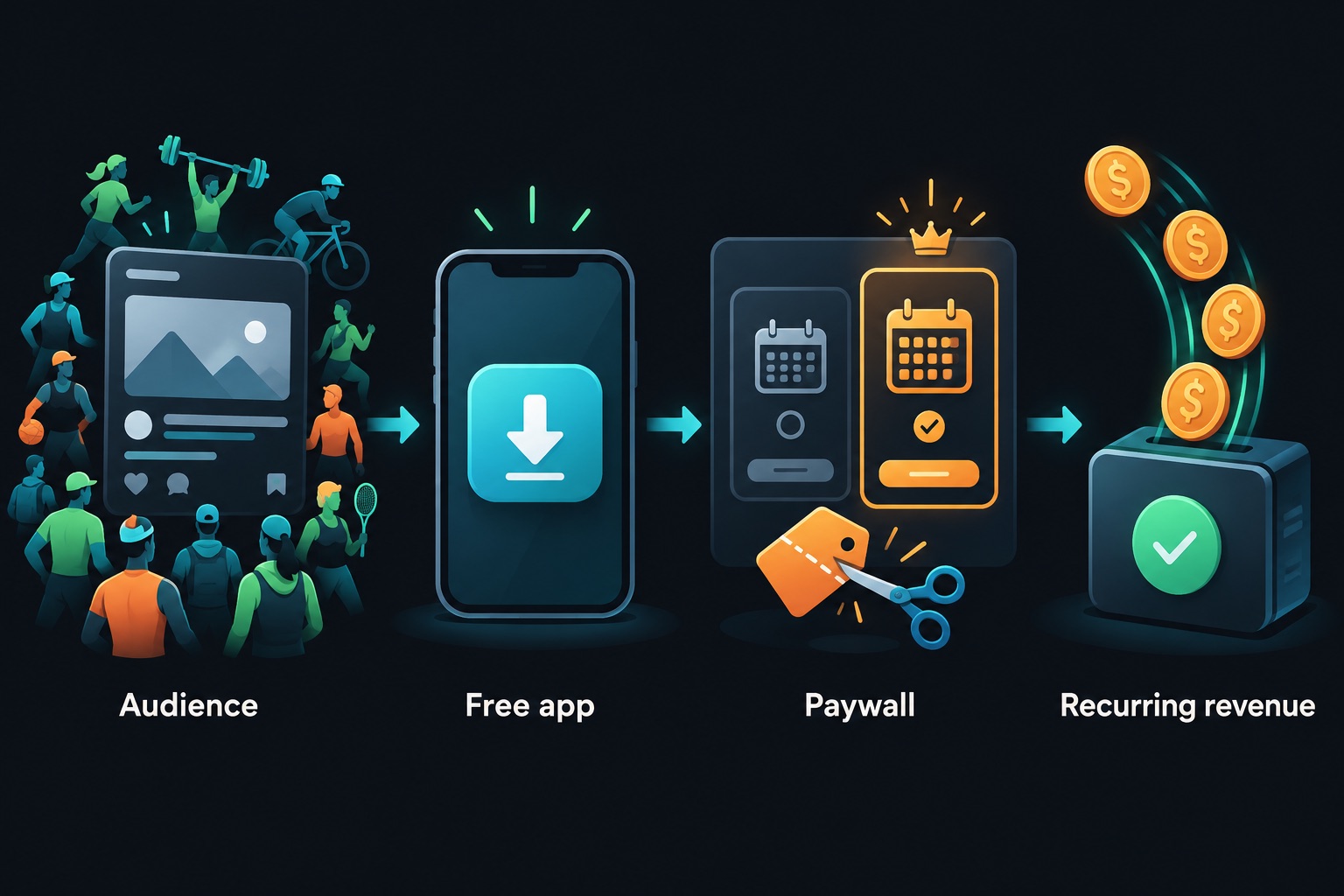
The app is a free download with in-app subscriptions. The App Store currently lists these plans:
- Weekly: $6.99
- Weekly Pro or Monthly: $9.99
- Yearly: $29.99, $39.99 or $49.99 (several yearly tiers)
Pricing was a real lever. Rork reports they launched at $59.99 a year, then cut the yearly plan to $29.99 once they saw how young their users were. Per Rork, conversions roughly tripled after the cut.
Now the verified numbers. TrustMRR shows 3,768 active subscriptions. whatsthe.app lists $3.54 of revenue per paying user and $20,164 over the last 28 days. My read: most subscribers are on cheap yearly plans, and volume does the work.
The growth line is steady. Rork reported $10,000 in the first month and $17,460 in a 28-day window by March 2026. Six months later, both tracking sites show roughly $20,000 to $21,000 per month.
One more detail from both listings: the app is marked for sale at $350,000. whatsthe.app notes the price was cut from $500,000. Ownership may change after this post goes live.
First users: the audience was already there
There was no cold start. By the time the app shipped, the 3AK brand already had a large following of young athletes. Rork's case study describes that audience as grown organically through training videos. The podcast summary says the following came from the 3AK brand and its Shopify store.
So the first-month $10,000 did not come from a lucky launch. It came from years of posting content for one specific group: sprinters who want to get faster. The founders told Rork: "Apps were the most successful thing we ever did."
What to copy
- Start where your people already are. They sold to athletes they had been talking to for years.
- Test price against your real audience. A yearly price young users could afford beat a "premium" price.
- Use a billing service like RevenueCat. It handles subscriptions and lets sites like TrustMRR verify your numbers.
- Keep the app narrow. One sport, one outcome: run faster.
- Learn just enough to debug. No-code builders get you far, but they still needed ChatGPT to fix things.
If you vibe-code this
A fitness subscription app stores health data, user videos and payment status. Here are the checks I'd run on this type of app, whatever tool built it:
- Check premium access on the server. A "isPro" flag stored in the app can be flipped. Confirm subscriptions from your billing provider on the server before unlocking paid data.
- Keep uploaded videos private. Stride videos should only be readable by their owner. See Supabase storage bucket security.
- Turn on Row Level Security (database rules that decide who can read each row). See Supabase RLS for vibe coders.
- Store login tokens in secure storage, not plain app storage. See React Native secure storage.
- Never ship secret keys inside the app. Anything in the app bundle can be extracted. See environment variables security.
A storage policy that lets each user read only files in their own folder:
create policy "Users read own videos"
on storage.objects for select
to authenticated
using (
  bucket_id = 'stride-videos'
  and (storage.foldername(name))[1] = (select auth.uid())::text
);
Building a subscription app like this and want a second pair of eyes before launch? Email [email protected] for a security audit of your vibe-coded app.
Key takeaway
3AK Track shows verified five-figure MRR from a no-code AI build. The build took weeks; the audience took years. If you don't have an audience yet, start posting for one specific group before you prompt your first screen.
More case studies: Vibe-coded apps making money · Security guide: Vibe coding security
Sources
- https://rork.com/blog/3ak-case-study (Rork, Mar 9, 2026)
- https://trustmrr.com/startup/3ak-track-field (checked Sept 28, 2026)
- https://www.whatsthe.app/braylin (updated Sept 26, 2026)
- https://apps.apple.com/us/app/3ak-track/id6756290066 (checked Sept 28, 2026)
- https://www.bulletpointpodcast.com/starterstory/we-built-this-20-k-month-app-while-in-college (Starter Story episode summary, Jun 28, 2026)