SocialCrawl Makes \$12.5K/mo: Vibe-Coded with Claude Code
September 29, 2026 · 1149 words
| Field | Detail |
|---|---|
| What it is | One API for public data from 67 social and web platforms, with the same response format for every platform |
| Builder | Developer (co-founder Oscar Lee, PhD in AI and physical computing, built it) |
| AI tool | Claude Code (they also list Codex) |
| Stack | Turborepo TypeScript monorepo, Next.js, Hono, Vercel AI SDK, Vercel, Cloudflare R2, Neon Postgres, Drizzle, Upstash, Better Auth, Stripe |
| Time to launch | 2 weeks to MVP; first paying customer within 48 hours of launch |
| Revenue | About $12.5K per month (Sept 2026). Self-reported |
| Source | Indie Hackers interview, socialcrawl.dev |

SocialCrawl makes about $12,500 a month, according to co-founder Selene Lee in an Indie Hackers interview from September 10, 2026. Her co-founder Oscar Lee built the first version in two weeks using Claude Code. The first paying customer arrived within 48 hours of launch. All figures are self-reported.
The one point of this case study: after four failed products, the one that worked solved a problem the founders had every day.
The problem: every platform returns data differently
If you build AI tools or dashboards, you often need public data from social platforms. Each platform has its own API (a way for programs to request data), its own format and its own limits. Supporting ten platforms can mean ten scrapers.
SocialCrawl wraps them in one. The homepage promises "one scraper API for every social platform". It covers 67 platforms and 630 endpoints (specific data requests), including TikTok, Instagram, YouTube, X, Reddit and LinkedIn. Every platform returns the same structure: author, engagement numbers, metadata. At interview time the count was 44+ platforms, so coverage is growing fast.
The founders came from academia. Selene spent nine years researching brain aging and holds a neuroscience PhD from Oxford. She left academia in summer 2025 to work on the business full-time.
Before SocialCrawl, they built four AI consumer products around their interests. None got enough traction. Selene says a big lesson was that they had built things they didn't use themselves. This time they started with a problem they hit daily.
How it was built
Oscar built the MVP in two weeks. Selene's summary is simple: Claude Code sped up development. The interview also lists heavy AI plans: two top-tier Claude Code subscriptions, plus Codex and Grok.
The stack is a serious developer setup:
- Turborepo monorepo in TypeScript (several apps and packages in one codebase)
- Next.js for the website and dashboard; Hono for the API itself
- Vercel AI SDK to call models from Anthropic, OpenAI, Google, xAI and Perplexity
- Vercel and Cloudflare (hosting, domains, R2 file storage)
- Neon Postgres with Drizzle (the database and the code that talks to it)
- Upstash Redis and QStash (fast caching and background queues)
- Better Auth (login) and Stripe (payments)
This is AI-assisted building by an experienced engineer, not a no-code story. The AI speeds up the typing. The architecture choices are still human.
How it makes money
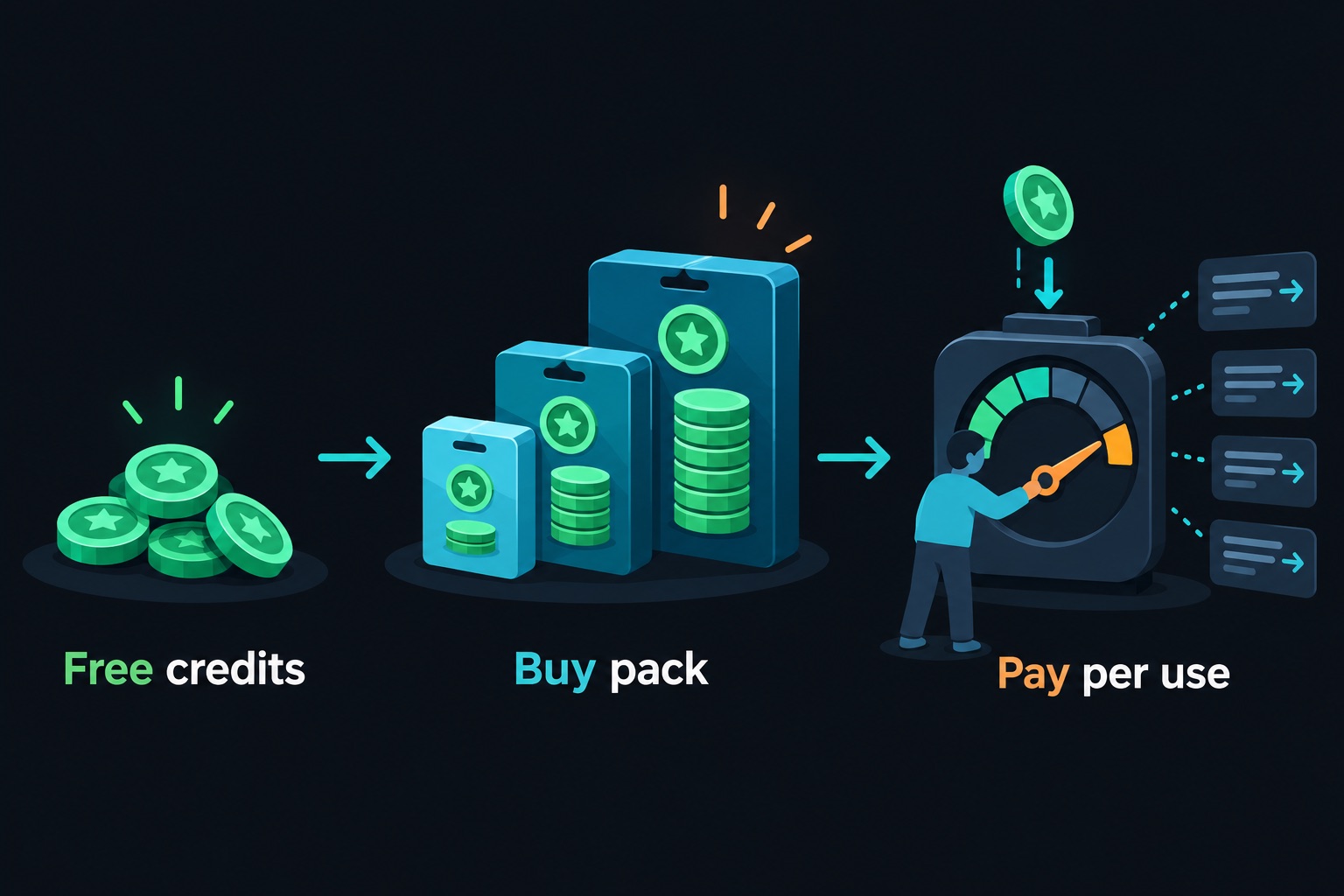
SocialCrawl sells prepaid credits instead of subscriptions. One standard request costs one credit; combined requests cost more. Prices are in British pounds:
- Free: 100 credits, no card required
- Starter: £15 for 2,500 credits
- Growth: £49 for 20,000 credits
- Pro: £299 for 150,000 credits
- Enterprise: custom
Credits never expire, and there's no auto-renewal unless you opt in. That lowers the fear of trying it. A developer can test for free, then buy a small pack when a project needs data.
Because revenue comes from packs, "$12.5K a month" is monthly sales, not classic subscription revenue. It can move more from month to month.
Selene's pricing advice is blunt: "The biggest lesson I'd give other founders is to stop treating a low price as their main advantage." Customers pay fair prices for tools that reliably fix painful problems.
First users: communities joined long before launch
The strongest launch channel was WhatsApp groups for indie founders. Selene had joined several of them long before SocialCrawl existed and took part as a genuine member. When the product launched, she wasn't a stranger dropping a link.
Other channels she lists:
- Personal network: friends, LinkedIn contacts and former colleagues
- Social media: X (2,200 followers), Threads (5,000+) and YouTube (800 subscribers)
- A personal blog (Friday AI Club) as a slower search-traffic play
She's honest that distribution was the hardest part. Getting people to care was harder than building the product.
What to copy
- Solve your own daily problem. Four products built on interests failed; the one built on real pain didn't.
- Join communities months before you sell. Be a member first.
- Offer free credits with no card. Developers want to test before they pay.
- Don't compete on price alone. Reliability is what API buyers pay for.
- Ship the MVP fast. Two weeks, then let paying users steer.
If you vibe-code this
A paid data API lives on API keys, metered credits and payments. Checks for this type of app:
- Store API keys hashed, like passwords. Show the full key once, then keep only the hash.
- Rate-limit per key. One leaked key shouldn't drain your upstream costs. See API rate limiting.
- Deduct credits atomically on the server, in the same database step that checks the balance.
- Verify Stripe webhooks before adding credits. See Stripe webhook security.
- Set CORS deliberately for a public API. See CORS configuration.
Creating and checking hashed API keys in Node:
import { createHash, randomBytes } from "node:crypto";

export function createApiKey() {
  const key = "sk_live_" + randomBytes(24).toString("base64url");
  const hash = createHash("sha256").update(key).digest("hex");
  return { key, hash }; // show `key` once, store only `hash`
}

export function hashApiKey(key: string) {
  return createHash("sha256").update(key).digest("hex"); // compare to stored hash
}
Selling API access you built with AI? Email [email protected] for a security audit of your keys, credits and billing flow.
Key takeaway
SocialCrawl pairs a fast Claude Code build with a problem its founders felt daily and communities they'd joined months earlier. The result is about $12.5K a month from prepaid credits. Build for your own pain, and show up in communities before you sell.
More case studies: Vibe-coded apps making money · Security guide: Vibe coding security
Sources
- https://www.indiehackers.com/post/tech/this-founder-left-academia-built-four-failed-products-then-hit-12-5k-mo-xkng30lczEuiLG4983UN (Indie Hackers, James Fleischmann, Sept 10, 2026)
- https://www.socialcrawl.dev/ (checked Sept 28, 2026)