Deep Personality Hit \$11K in 30 Days: A Vibe-Coded Case Study
October 7, 2026 · 1199 words
| Fact | Value |
|---|---|
| What it is | AI personality assessment: 28 instruments, 35–50 minutes, a roughly 10,000-word personal profile |
| Builder | Unknown: Andrew Wilkinson started it; Bryce Edwards joined to polish and launch. Coding backgrounds not stated |
| AI tool | Unknown. The founders say they "vibe coded" it but don't name a tool |
| Stack | Not disclosed |
| Time to launch | Roughly three weeks from the founders' first sit-down (mid-January, per the post's "6 weeks ago") to launch in the first week of February 2026 (estimate) |
| Revenue | $11K in about 30 days after launch (self-reported, Indie Hackers) |
| Source | Indie Hackers, March 2026 |
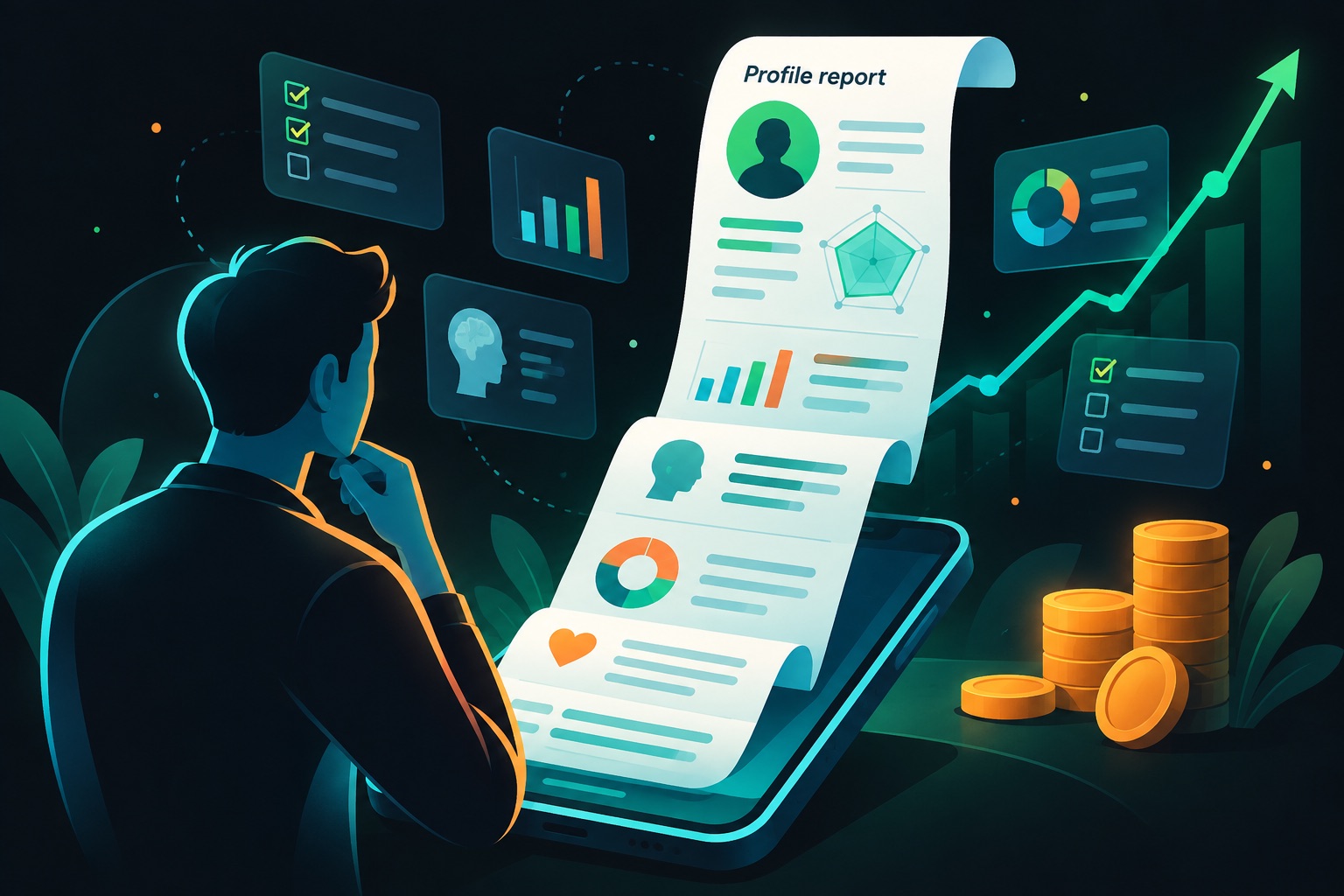
Deep Personality is an AI-powered personality test. You answer questions for 35–50 minutes, and it writes you a profile of about 10,000 words. Co-founder Bryce Edwards wrote on Indie Hackers that it crossed $11,000 in revenue about 30 days after launch.
The founders describe it as vibe coded (built by prompting AI tools rather than writing code by hand). But there's a gap in this story, and I'll be upfront about it: they don't say which AI tool they used. So this case study lists the tool as unknown.
The problem: tests that stop at a label
Most free personality tests hand you a type and a paragraph. Deep Personality goes much further.
Its homepage says it runs 28 research-backed instruments. These include well-known personality and attachment questionnaires, anxiety and mood scales, a career-interest test, and screeners for ADHD, OCD and autism traits. It then reads them together and writes one long profile.
The pitch is personal, not clinical. One homepage line promises to explain why you keep picking the same kind of partner. Relationships are the hook.
How it was built: "vibe coded," tool not named
The origin, per Bryce's post:
- Andrew Wilkinson had been hacking on an AI personality test on his own.
- Bryce had just sold his company and had free time. Andrew wanted someone to help polish it and launch.
- Bryce jumped in. His words:
"Andrew was looking for someone to help polish it up and launch, so I jumped in and we vibe coded like mad men." — Bryce Edwards, via Indie Hackers
That's all we know about the build. No editor, no app builder, no model, no database or hosting is named. The post also doesn't say whether either founder writes code professionally.
I'd rather leave those cells blank than guess. If the founders share their tools, this post will be updated.
Timing: the post (dated March 1) says Andrew first sat down with Bryce about six weeks earlier, and they launched in the first week of February 2026. By those dates, the polish-and-launch sprint took roughly three weeks (my estimate, not confirmed by the founders).
How it makes money
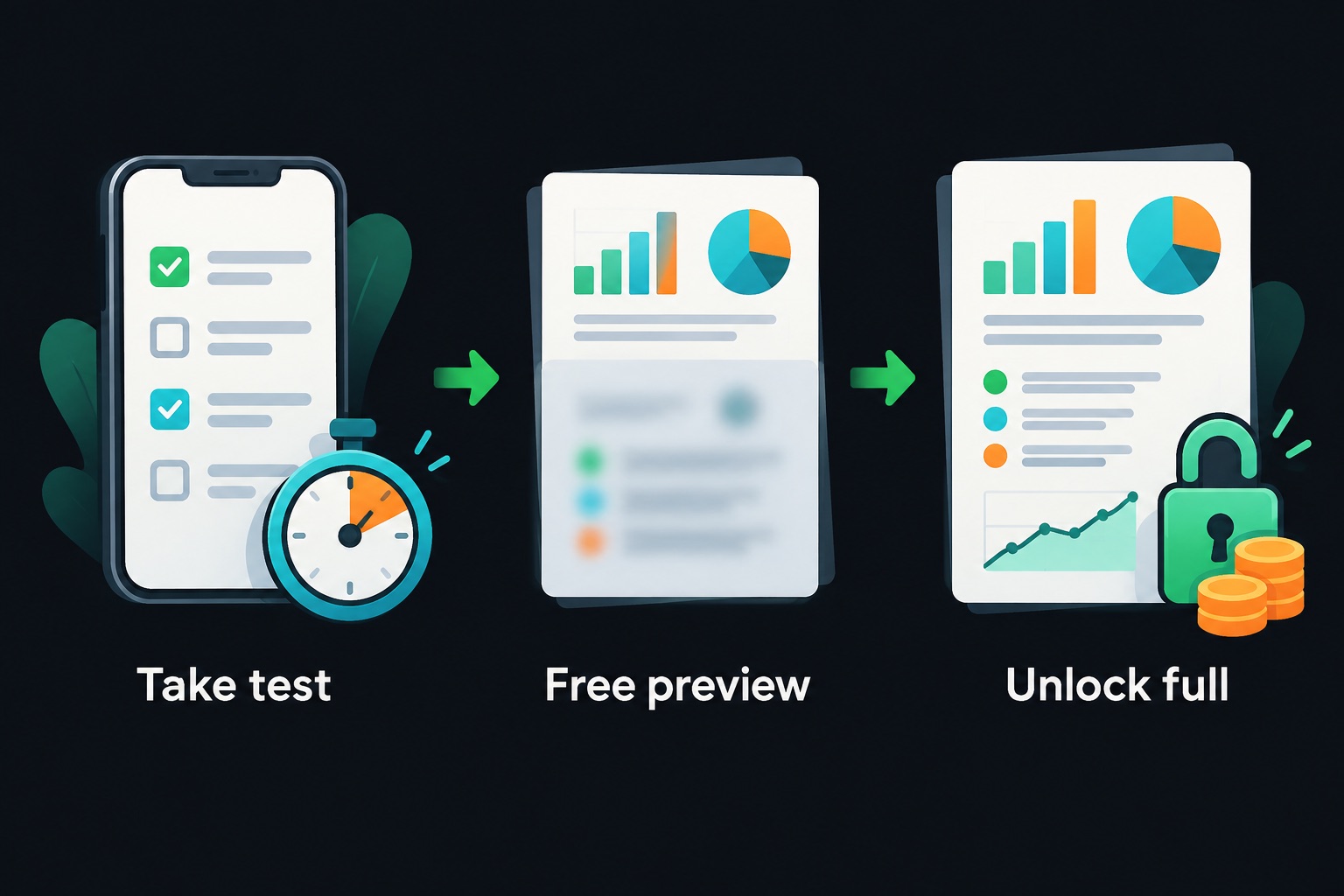
The model is a classic freemium funnel (free first, pay for more):
- Free: you get your complete test results, plus a preview of the AI analysis. The post says the preview is about 40% of the full analysis.
- Paid: the rest of the AI analysis.
As of September 2026, the homepage shows the free assessment with no account needed to start, and a Premium plan at $9.99/month.
One open question: the Indie Hackers post doesn't say whether the first $11K came from one-time purchases or subscriptions. A commenter asked. The pricing may also have changed since February. So I can't split that $11K into "customers × price."
Why the 40% preview works, in my view: you've already spent 35–50 minutes. You've read a chunk of a report about yourself. Stopping there feels like leaving a movie at the midpoint.
First users: themselves, then partners
The launch path was low-tech:
- Test on the founders. Bryce took it himself first to check whether it felt accurate.
- Test on partners. Next was Bryce's girlfriend.
- Compare as a couple. They ran the comparison feature for a joint analysis of their relationship.
The post doesn't say where the first paying users came from; commenters asked about traffic sources.
The post also describes a comparison feature for couples, which shows a joint relationship analysis. (That feature comes from the March post; I couldn't confirm it on the current homepage, so treat it as unconfirmed today.) That's a built-in sharing loop. To compare, your partner has to take the test too. Every paying user can bring in a second one.
No paid channels are mentioned in the post.
What to copy
- Give away most of the value, then paywall the payoff. Full results plus 40% of the analysis builds trust before the ask.
- Design a feature that needs a second person. Couple comparison turns every user into a recruiter.
- Test on people who will be honest. Partners notice quickly when a profile is wrong.
- Ship in weeks, not months. By the post's dates, a few weeks from "polish it up" to launch.
If you vibe-code this
A personality app like this collects some of the most sensitive data there is: mental-health screener answers, attachment style, relationship details. Here are checks for this type of app. They are general, not findings about Deep Personality.
- Lock results to their owner. Use row level security (database rules that limit each user to their own rows). See Supabase RLS for vibe coders.
- Make result and share links unguessable. With no account required, the link often is the password. Sequential IDs let anyone walk through other people's results. See IDOR explained.
- Keep answers out of logs and analytics. Don't send raw screener answers to error trackers or event tools. Send an ID instead.
- Treat user text sent to the LLM as untrusted. Free-text answers can carry instructions. See prompt injection for vibe coders.
- Handle login and sessions carefully. See secure authentication for vibe coders.
Creating an unguessable, expiring share link in Node:
import { randomBytes } from "node:crypto";

export function newShareLink(resultId: string) {
  const token = randomBytes(32).toString("base64url"); // 256 bits, not guessable
  const expiresAt = new Date(Date.now() + 7 * 24 * 60 * 60 * 1000); // 7 days
  return { token, resultId, expiresAt }; // store this row; look up by token
}
Handling sensitive user data in a vibe-coded app? Email [email protected] for a security audit.
Key takeaway
Deep Personality's $11K in 30 days (self-reported) came from a generous free preview and a feature that needs a partner. The build tool is unknown, which is a reminder: the tool matters less than the funnel.
More case studies: vibe-coded apps making money. Before you launch, read the vibe coding security guide.
Sources
- Indie Hackers post by Bryce Edwards: https://www.indiehackers.com/post/from-0-to-11k-in-30-days-with-a-vibe-coded-ai-personality-analysis-b9ad81d534
- Deep Personality homepage: https://deeppersonality.app/