7 Claude Code Agents Ran a Business for 21 Days: \$0 Revenue
September 29, 2026 · 1102 words
| Field | Detail |
|---|---|
| What it is | An experiment: seven Claude Code subagents running small online businesses unattended, now sold as a kit |
| Builder | Solo builder (background not disclosed) |
| AI tool | Claude Code (seven role-based subagents) |
| Stack | Claude Code, a /board-meeting slash command, PowerShell runners, Windows Task Scheduler; published to note.com, YouTube Shorts, Dev.to, X, Gumroad, Fiverr, BOOTH |
| Time to launch | Not disclosed; the experiment ran 21 days |
| Revenue | $0. Self-reported |
| Source | The author's Dev.to post (Sept 13, 2026) |
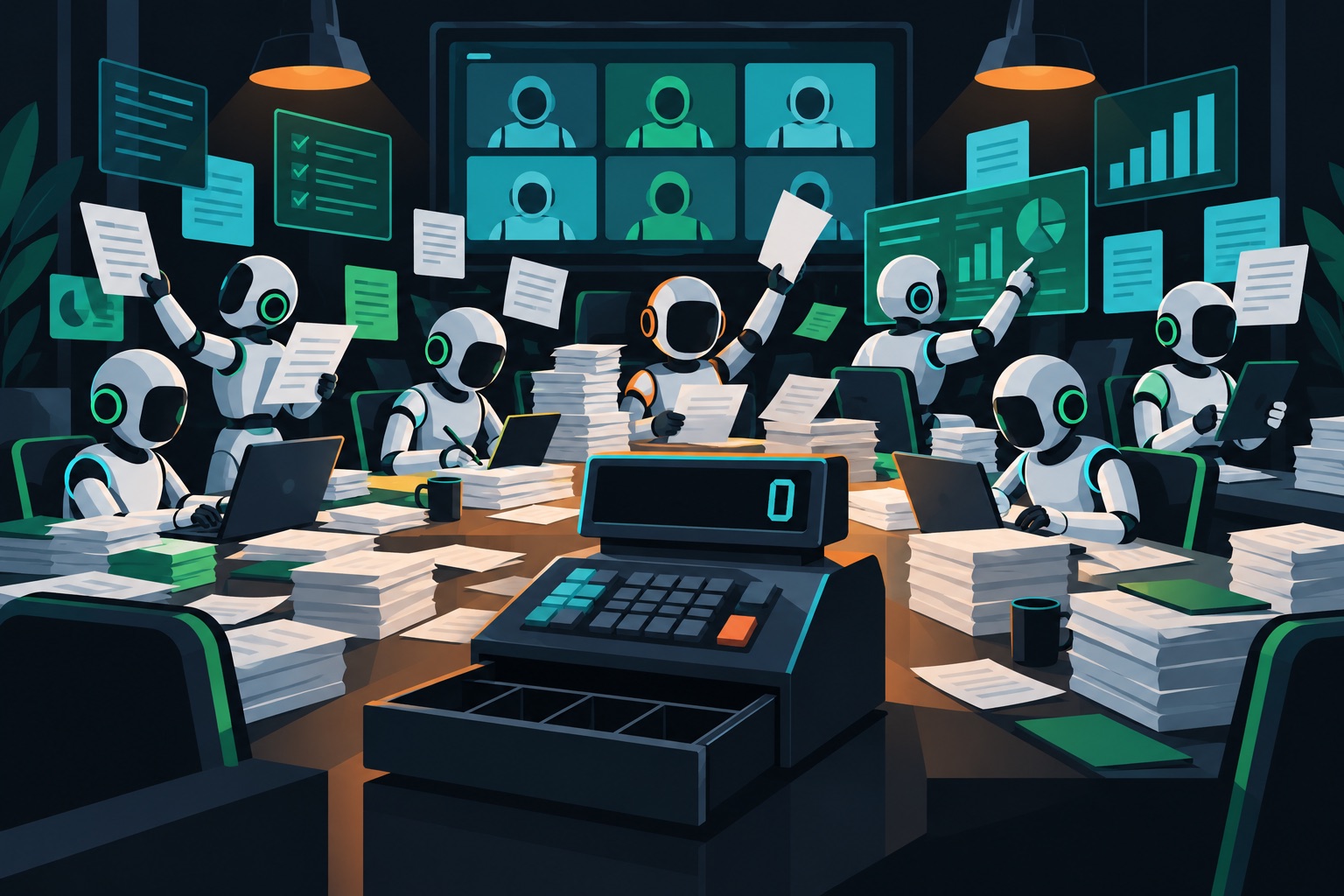
Seven Claude Code agents held 24 "board meetings" over 21 days. They produced 16 articles, 18 YouTube Shorts, 3 digital products, 5 freelance proposals and 382 commits. Revenue: $0.
The builder, who posts as ko-hi, wrote it all up in a Dev.to post on September 13, 2026. It's one of the most honest agent write-ups I've read, so this postmortem retells it.
The one point: an agent loop improves whatever it can measure, so make it measure money and real results.
What they built
The setup is a "one-person company" run by AI. Seven Claude Code subagents (separate AI workers with their own role instructions) played CEO, secretary, researcher, writer, marketer, designer and programmer.
A slash command, /board-meeting, started each meeting. The agents researched, decided what to make, then wrote, designed and shipped it. Windows Task Scheduler (the built-in Windows tool that runs programs on a timer) kicked everything off daily. PowerShell scripts then pushed output to note.com (a Japanese blog platform), YouTube Shorts, Dev.to, X and marketplaces.
The author describes running ten small businesses from that one command. Nobody had to be at the keyboard.
What happened
The machine produced a lot. The 18 Shorts collected 12,124 views. Three Dev.to posts got 92 views. Three digital products went up on Gumroad, Fiverr and BOOTH. None of it sold.
Along the way, several things broke without anyone noticing:
- "Success" that wasn't. A PowerShell script reported exit code 0 (the signal for "worked fine"). But PowerShell 5.1 had misread a UTF-8 file saved without a byte-order mark and mangled a Japanese command name. Three days of "OK", zero Shorts posted.
- Drafts, not posts. The
note.comAPI said "success" but saved articles as drafts. The problem only surfaced when monitoring found zero views on pages that didn't exist. - Expired login tokens. The Google OAuth app was left in "Testing" mode. In that mode, refresh tokens (long-lived login keys) expire after seven days. YouTube posting stopped until a human clicked through again.
- A burned usage budget. One unattended meeting used the entire rolling Claude usage window in 37 minutes on September 8. All seven agents had read the whole strategy file.
- Missing files. An X reply generator also returned exit code 0 without creating its output file.
The most-read article on the Japanese blog was the honest one, titled "3 proposals, 0 orders".
The real reason it made $0
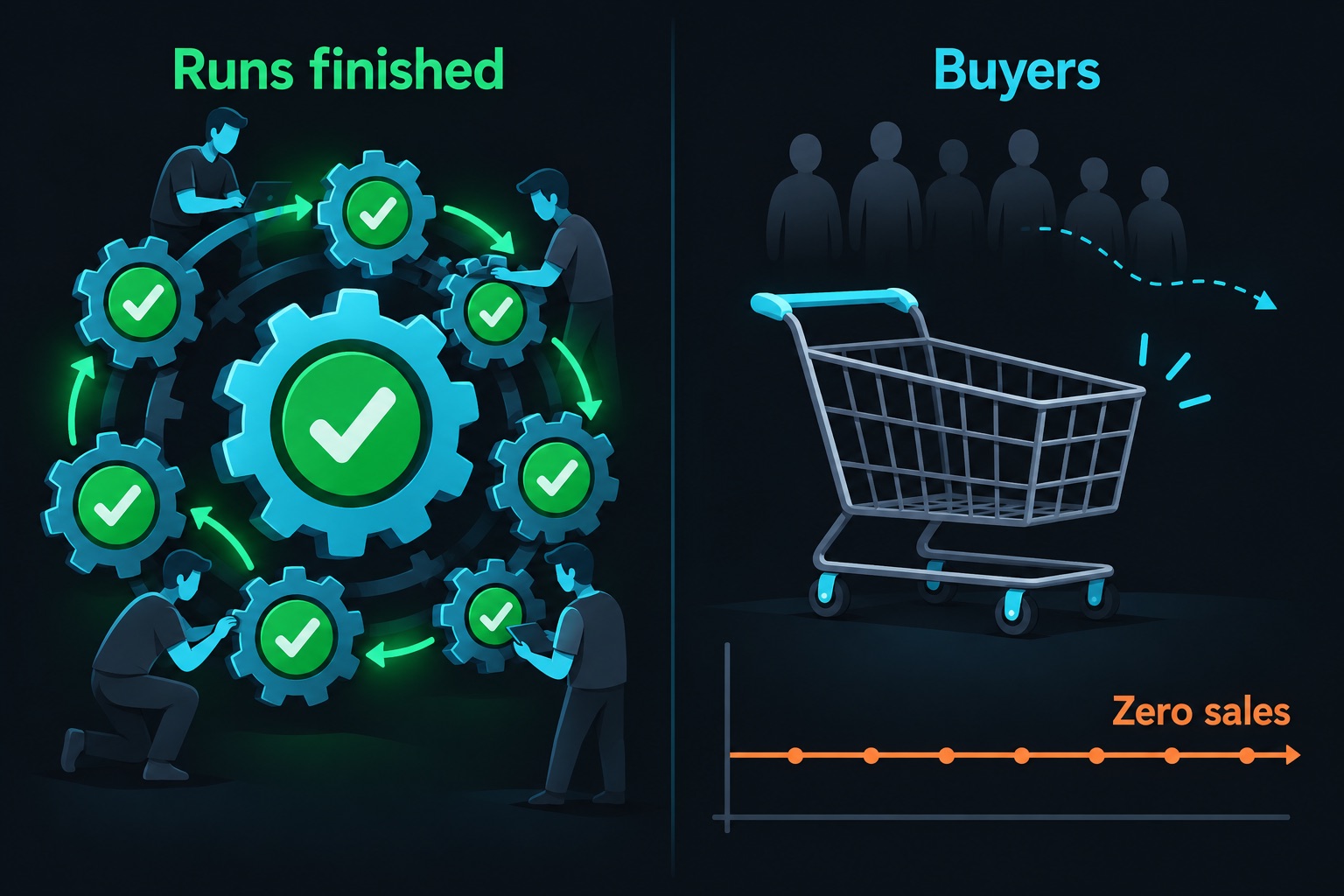
The bugs slowed things down, but they aren't why revenue stayed at zero. The author's own diagnosis: the loop optimized what it could see, which was its own process. Runs completed, files appeared, meetings happened. Nobody was measuring buyers.
The freelance numbers show it. The agent scanned 73 new listings on a Japanese freelance platform and found 9 that qualified. The one job it applied to already had 107 proposals, and 165 a week later. Other listings showed 12 to 210 proposals each. More output couldn't beat a crowded market.
Today the author sells the setup as the One-Person Company Kit for $19. The listing says plainly that the system has "not made meaningful revenue" across the author's side projects. That candor is worth more than most "passive income with AI" threads.
What to do instead
The author's lessons, plus how I'd apply them:
- Define "done" as an artifact. In the author's words: "Define 'done' as an artifact — a file, a URL that returns 200, a row in a table — never as an exit code."
- Publish OAuth apps to production before scheduling. Testing-mode tokens will expire mid-run.
- List every step that needs a human click. Each one becomes an outage when nobody is watching.
- Cap unattended runs. Limit time and usage per run, and space full runs apart. The author now allows at most one full run per 12 hours.
- Measure external signals. Views, replies and dollars, not "the run finished".
- Count the competition before you pitch. If a gig already has 100+ proposals, skip it.
If you're a beginner, the bigger lesson is simpler. Point your agents at one product for one buyer before you automate ten businesses.
If you vibe-code this
Unattended agent pipelines hold tokens, post publicly and read untrusted web pages. For this type of system, check:
- Verify outputs, not exit codes. The snippet below does this.
- Keep OAuth tokens and API keys out of prompts and repos. See environment variables security.
- Treat fetched pages as hostile. Job listings and web pages can carry instructions aimed at your agent. See prompt injection.
- Give each agent only the tools it needs. See MCP security tools.
- Watch what agents install. See supply chain security.
A small check that fails unless every published URL is actually live:
// verify-published.mjs: run with node verify-published.mjs <url> <url> ...
const urls = process.argv.slice(2);
let failed = 0;
for (const url of urls) {
  const res = await fetch(url, { method: "HEAD" });
  if (!res.ok) {
    console.error(`NOT LIVE: ${url} (${res.status})`);
    failed++;
  }
}
process.exit(failed ? 1 : 0);
Running agents unattended with real accounts attached? Email [email protected] for a security review of your setup.
Key takeaway
Twenty-one days of agent output produced $0 because the loop measured its own activity, not buyers. Verify artifacts, remove hidden human clicks, cap usage, and make revenue the metric your agents can see.
More case studies: Vibe-coded apps making money · Security guide: Vibe coding security
Sources
- https://dev.to/ko-hi/7-claude-code-agents-held-24-board-meetings-revenue-0-2e6c (ko-hi on
Dev.to, Sept 13, 2026) - https://tachibana53.gumroad.com/l/claude-code-company-kit (checked Sept 28, 2026)