How a Non-Developer Built Agensi with Claude Code and Lovable
October 7, 2026 · 1256 words
| TL;DR | |
|---|---|
| What it is | A curated marketplace for AI agent "skills" (SKILL.md files) that teach tools like Claude Code or Cursor a specific job |
| Builder | Non-developer (self-described non-technical founder, based in the Netherlands) |
| AI tool | Claude Code and Lovable |
| Stack | Not disclosed (includes an MCP server and an automated skill scanner; Stripe and USDC payments per the site) |
| Time to launch | A few months (per the founder) |
| Revenue | About $200 in sales in month 1, plus 1 paying yearly subscriber (self-reported, April 2026) |
| Source | Show HN, April 21, 2026 |
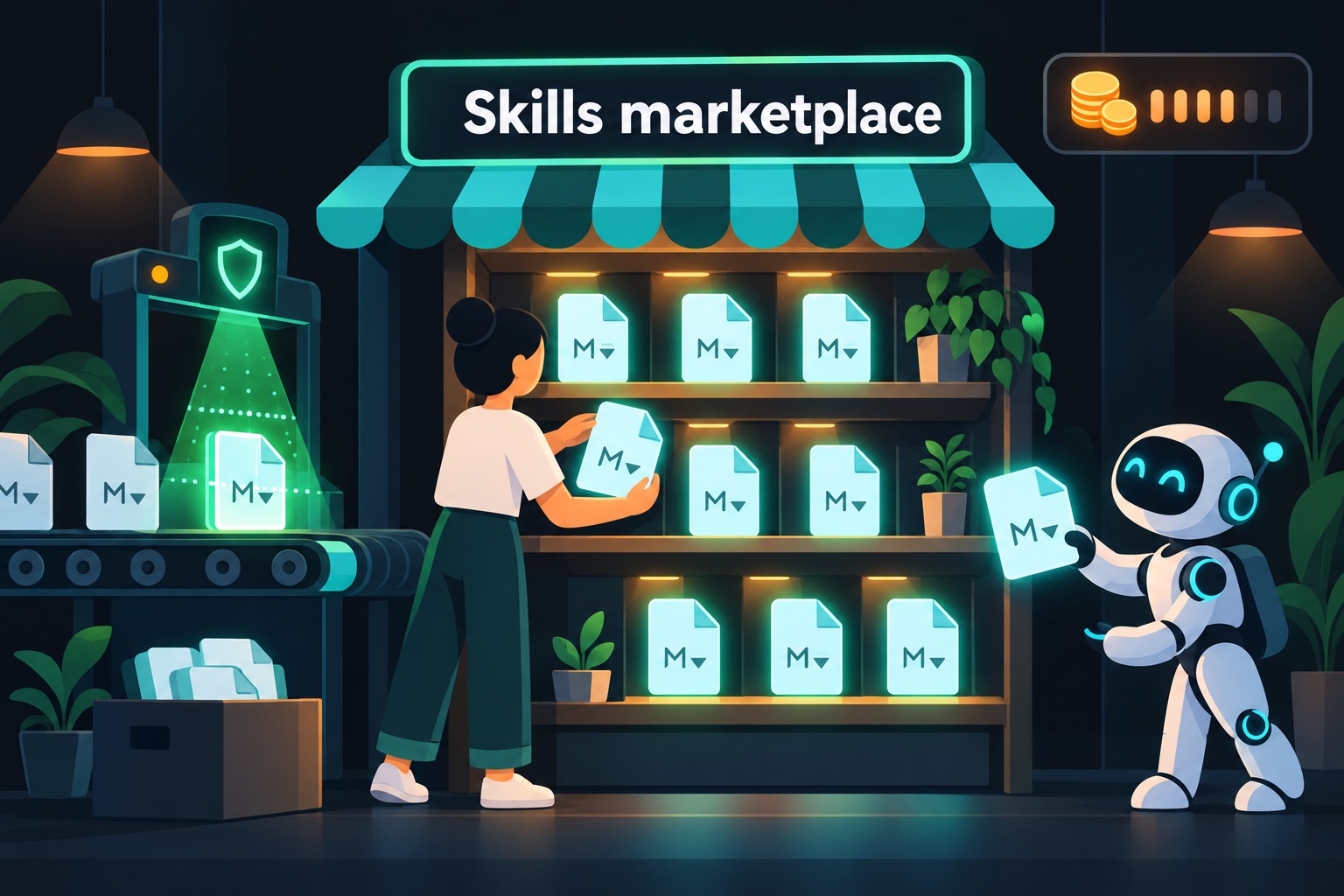
About $200 in sales in the first month. One paying subscriber. Roughly 7,000 active users in 28 days.
Those were the numbers a non-technical founder shared when launching Agensi on Hacker News. The founder built a two-sided marketplace, with buyers, sellers, payments and payouts, using mostly Claude Code and Lovable. The numbers are small and honest, and that makes them useful.
The one point of this post: a non-developer can now build a marketplace, but the hard parts left over are trust and money flows, not screens.
The founder's background
Samuel, the founder, is based in the Netherlands. The Show HN post says it plainly:
"I'm a non-technical founder in the Netherlands." — Samuellrose on Hacker News
Samuel hasn't shared a work history. What's clear is the product chosen. Agensi sells "skills": small instruction files, often called SKILL.md, that you drop into an AI coding agent. A skill teaches the agent to do one job well, such as writing sales emails or reviewing a contract.
That's a smart choice for a non-developer. The product is mostly text written by experts. The software is the shop around it.
Tool choice
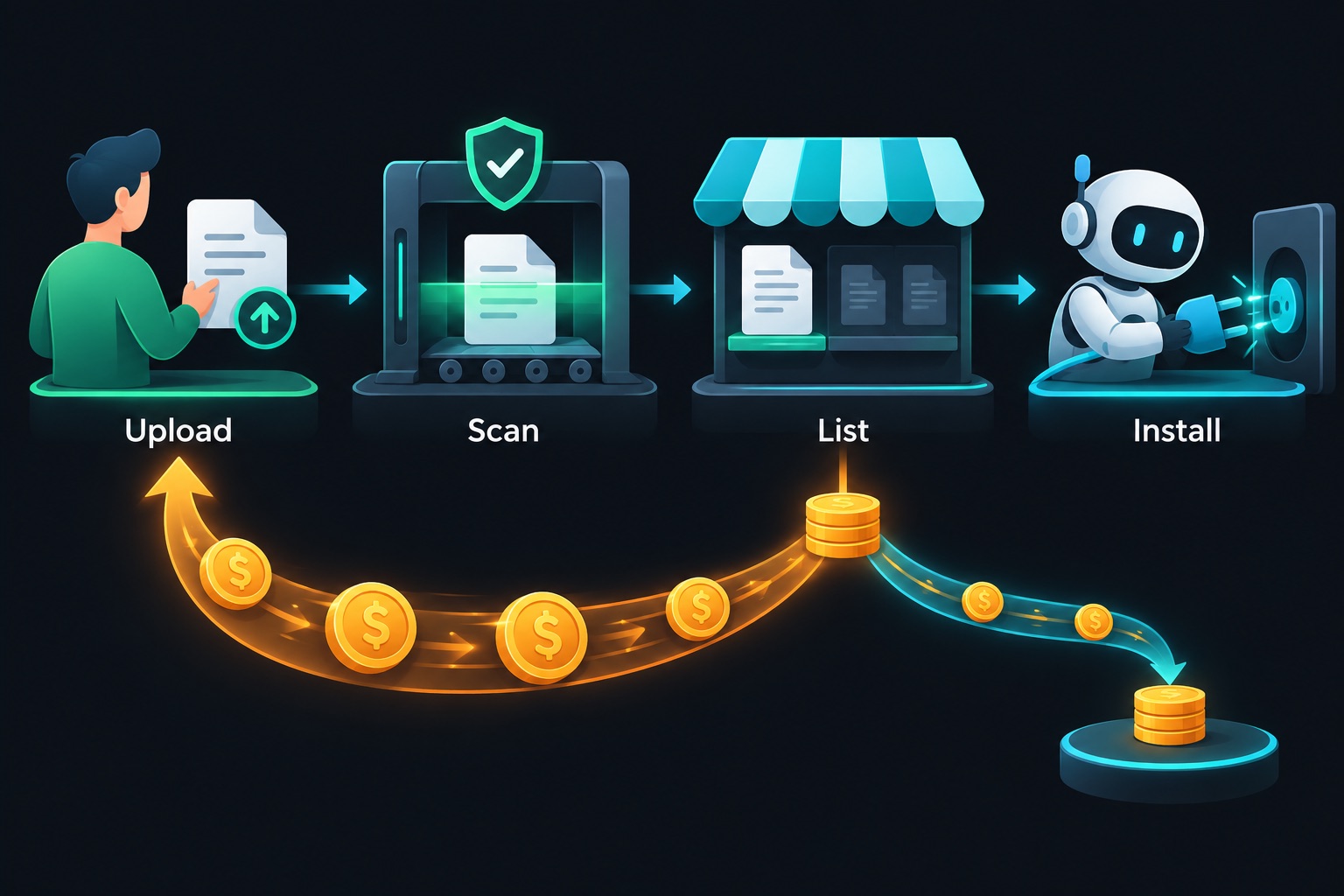
Per the HN post, the platform was built mostly with Claude Code and Lovable over a few months. The post doesn't say which tool did which part. Here is what each one usually brings:
- Lovable builds full web apps from prompts in the browser. It's quick for pages, forms and dashboards.
- Claude Code is an AI agent that works in your terminal. It reads and edits a whole codebase, which helps once an app has many moving parts.
The platform also has an MCP server with four tools. MCP (Model Context Protocol) is a standard way for AI agents to call outside tools. Here, it lets a user's agent find and install skills directly.
The launch business model had two paths for creators:
- Direct sales: creators set a price and kept 80%, minus a $0.50 fee per sale.
- MCP subscription: $9 a month with a 3-day trial. Creators shared 70% of net subscription revenue, split by which skills subscribers actually used.
Where the founder got stuck
The post doesn't describe specific bugs or blockers. It also doesn't say whether the founder paid anyone for help, so I won't guess.
The founder's questions to HN readers show where the uncertainty was, though. They asked about four things:
- Whether the creator split was fair.
- How deep the security scan should go: verification, manual review or public reports.
- How to stay defensible if AI companies launch their own skill stores.
- Which skills were missing from the catalog.
Notice that none of these are coding questions. The AI tools got the platform built. What was left were business and trust questions.
The security question matters most. Every skill runs through an automated scan. It checks permission boundaries, outbound network requests, dependency red flags and common malware patterns. The post also cited outside research finding that 36% of sampled skills had prompt injection vectors. That means hidden text that tries to hijack the AI reading it.
What changed since launch
The site looks different five months later:
- Pricing moved to credits. Free is $0, with credits at $0.20 each. Starter is $9 a month for 50 credits. Pro is $19 a month for 120 credits. Enterprise is custom, from $0.12 a credit.
- The creator split is now simpler. The homepage says creators keep 70%, with a flat 30% platform fee. The site lists Stripe and USDC on Solana as payment options.
- The catalog grew. The homepage claims 7,000+ skills and 7,500+ users, up from 200+ skills at launch.
- The scan got a name. The site describes an "8-point scan" before any skill goes live.
I can't verify the new counts, so treat them as the site's own claims.
What a non-developer should copy
- Pick a product where the value is content, not code. Skills are text. The AI can build the shop around them.
- Share small numbers early. $200 and one subscriber is a real baseline. It invites useful feedback.
- Ask the business questions out loud. Splits, trust and moat decide whether a marketplace works.
- Treat security as a feature buyers can see. A named scan is a selling point when your inventory is code-like.
- Simplify pricing as you learn. The site now shows one flat 70% creator split and credit plans.
If you vibe-code this
A marketplace that sells user-submitted files that AI agents will run has a few classic weak spots. These are checks for the app type, not claims about Agensi.
- A scan is a filter, not a sandbox. Automated checks miss things. Flag suspicious uploads for human review. See supply chain security.
- Look for prompt injection in the text itself. A skill is instructions, so the attack can be plain English. See prompt injection.
- Lock down your MCP server. Require auth and limit what each tool can do. See MCP security tools.
- Verify payment webhooks before paying creators. Payouts must follow real, signed payments. See Stripe webhook security.
Here is a tiny first-pass red-flag check for submitted skill files. It sends matches to a human instead of auto-publishing:
const RED_FLAGS = [
  { name: "pipe-to-shell install", re: /curl[^\n|]*\|\s*(ba)?sh/i },
  { name: "injection phrasing", re: /ignore (all )?(previous|prior) instructions/i },
  { name: "secret access", re: /(\.ssh\/id_|\.env\b|OPENAI_API_KEY|AWS_SECRET)/i },
];

export function flagSkill(text) {
  return RED_FLAGS.filter((f) => f.re.test(text)).map((f) => f.name);
}
// if (flagSkill(file).length > 0) queue it for manual review
Running a marketplace or MCP server you built with AI? Email me at [email protected] for a security audit.
Key takeaway
Agensi shows how far a non-developer can get with Claude Code and Lovable: a working marketplace with payments, payouts and an MCP server. The first month made about $200. The open questions were about fairness, trust and moat. That's where a non-dev founder's time now goes.
More case studies: Vibe-coded apps making money · Security basics: Vibe coding security guide
Sources
- Samuellrose, "Show HN: Agensi – Curated marketplace for AI agent skills (
SKILL.md)," Hacker News, April 21, 2026: https://news.ycombinator.com/item?id=47846681 - Agensi homepage (checked September 2026): https://www.agensi.io
- Agensi pricing (checked September 2026): https://www.agensi.io/pricing