Accordio's Pricing, Explained: What a \$39/mo Vibe-Coded App Charges
October 7, 2026 · 1219 words
| Question | Answer |
|---|---|
| What it is | AI back office for freelancers: proposals, contracts, e-signatures, invoices, payment reminders and time tracking |
| Builder | Unknown (21-year-old founder who ran a design studio; coding background not stated) |
| AI tool | Four full rebuilds: Lovable, then Gemini, then GPT-5, then Claude |
| Stack | Next.js, Supabase, Claude for AI, Stripe Connect for client payments, custom e-signature system |
| Time to launch | About 2 years, 4 rebuilds |
| Revenue | Not disclosed (pricing page only): Free, or Legend at $39/mo or $29/mo billed yearly |
| Source | Show HN, Jan 16, 2026 |
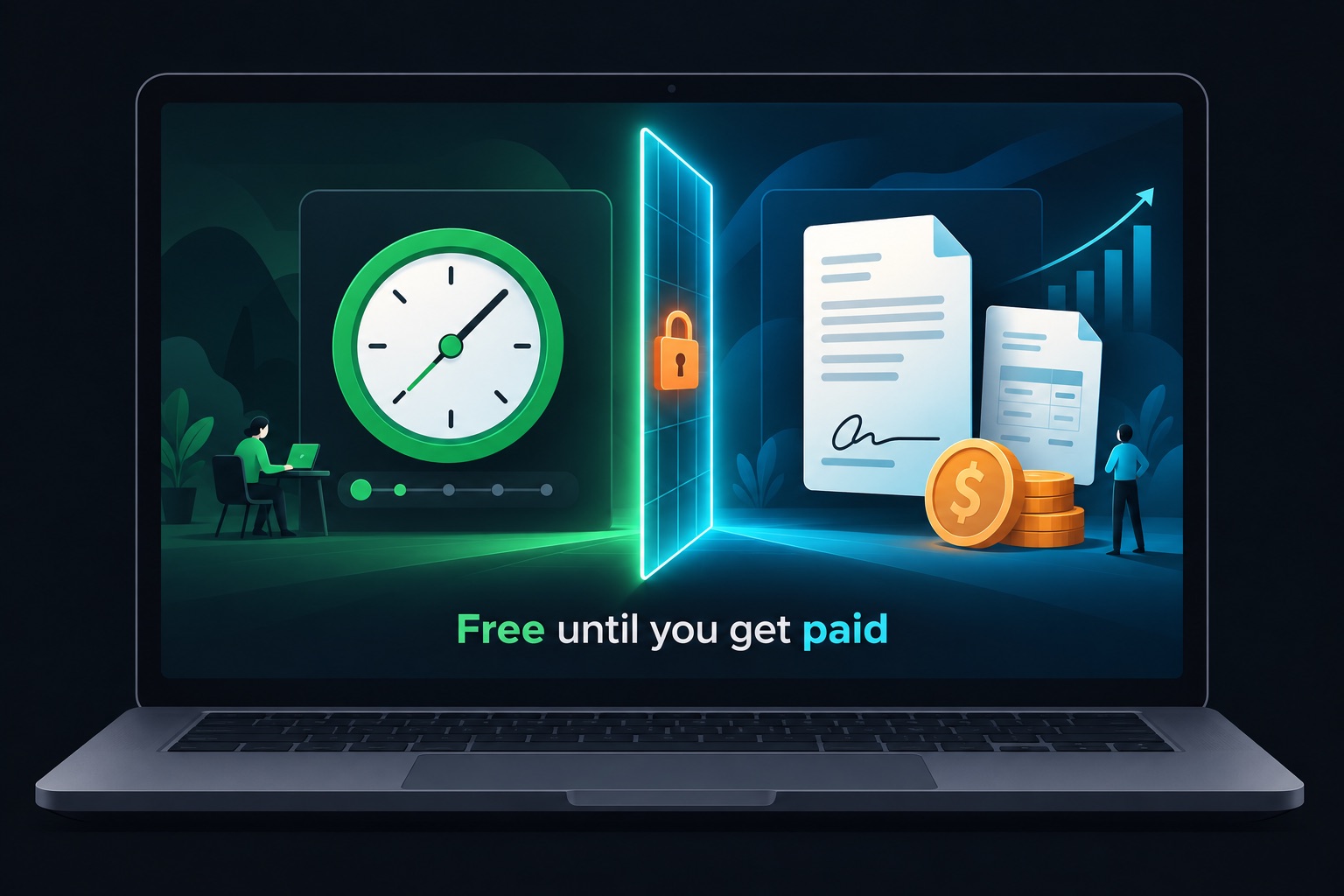
When Accordio launched on Show HN in January 2026, it was free to use. Today it has one paid plan, called Legend, at $39 a month or $29 a month billed yearly. Its free plan still exists, but the line between the two has moved to a very specific place: the moment you want to get paid.
Revenue isn't disclosed. So this is a teardown of the pricing itself, and what a vibe-coded SaaS (software sold as a subscription) can learn from it.
Who built it, and how
The founder is Roma, 21, from Bucharest. In a companion Show HN post, he explains the origin. At 20 he ran a 12-person design studio. Then he lost more than €50K to clients who never paid. There were no contracts, only trust. The studio collapsed.
Accordio is the tool he wishes he had. You paste your meeting notes. AI turns them into a proposal. The client accepts, a contract is generated, the client signs, and an invoice is ready.
The build story is unusual. He says he had been building it with AI for two years, through four complete rebuilds: Lovable, then Gemini, then GPT-5, then Claude. Lovable is an AI app builder that generates a full web app from prompts. The stack he listed is Next.js, Supabase, Claude for the AI, and Stripe Connect for payments. He built the e-signature system himself, because the DocuSign API was too expensive.
The company behind it is Deduxer SRL, per the site footer.
The tiers
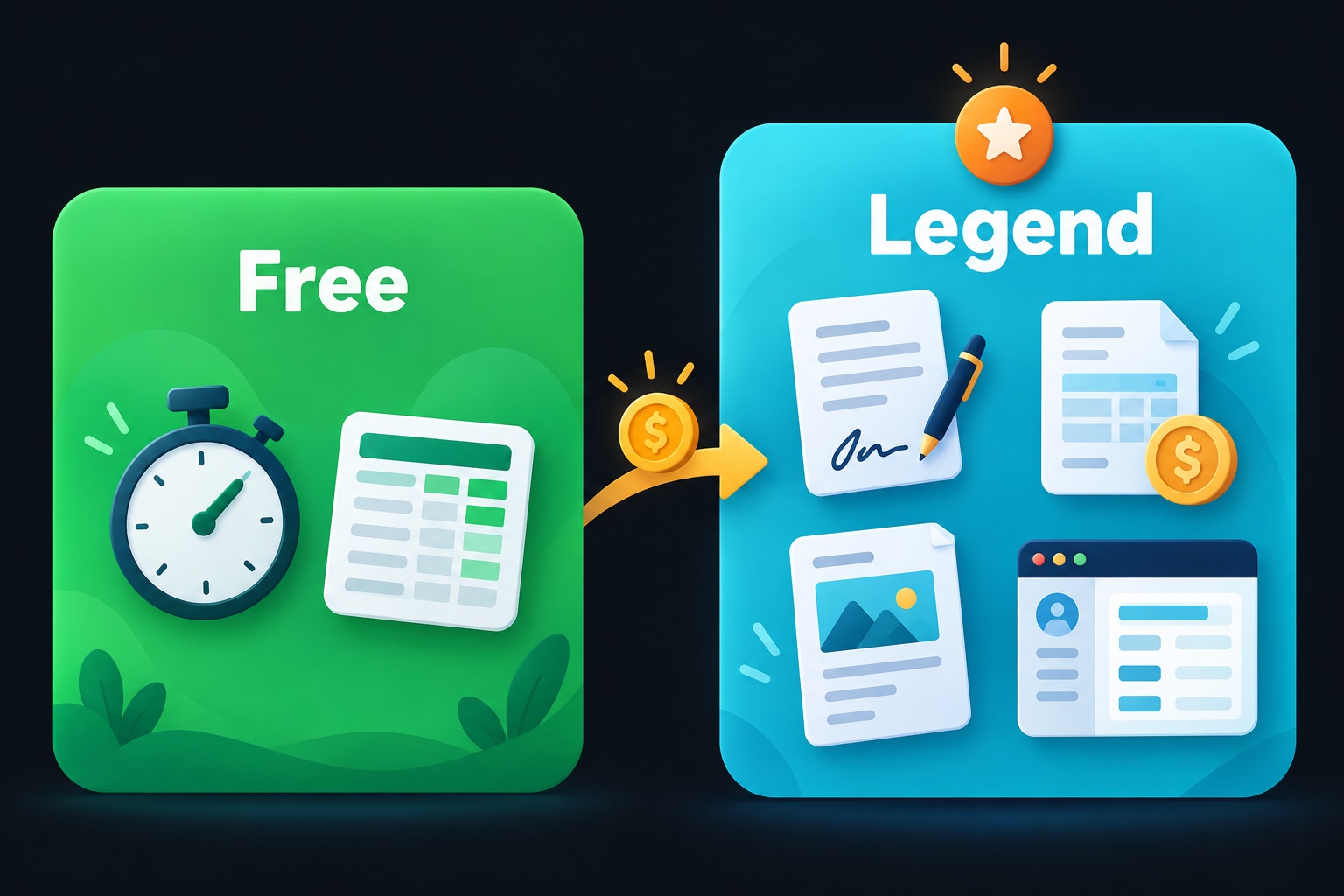
The pricing section has two plans:
| Plan | Price | What you get |
|---|---|---|
| Free | $0, no card, "no trial clock" | Mac time tracker, timers, time history, unlimited clients and projects, Claude/ChatGPT integration, WhatsApp/Telegram assistant, client-ready timesheets |
| Legend | $39/mo, or $29/mo billed yearly ($348/yr) | Everything, plus contracts with e-signature, invoices with payment links, proposals, reminders, client portal, meeting recording, expenses, bank reconciliation, 10,000 AI credits a month |
The yearly plan saves $120 a year, or about 26%. That is a bigger discount than the common "two months free."
The free vs paid line
Here is the smart part. Free covers tracking your time. Paid covers everything that turns that time into money: proposals, contracts, signatures and invoices.
The page says it directly. The free plan is for tracking time, and you upgrade "the day the hours need an invoice." Legend also promises unlimited e-signatures and zero commission on payments.
So the free plan isn't a crippled demo. It is a useful tool on its own. But it sits one step before the moment a freelancer has money on the line. That is when paying $29 to $39 feels easy.
Trial and refunds
- Trial: 14 days of Legend, no credit card, cancel anytime.
- After the trial: Contracts, proposals, invoices and signatures stay viewable. You just can't create new ones until you subscribe. Your data isn't held hostage.
- Refunds: The refund policy says billing runs through Paddle, a "merchant of record." That means Paddle is the legal seller and handles tax and refunds. Refunds follow your local consumer rights. In the EU and UK, that is a 14-day right of withdrawal from purchase.
Using a merchant of record is a common move for solo founders selling worldwide. You don't have to register for sales tax in every country yourself.
What the price signals
$39 a month is not a cheap-tool price. It says "this replaces several tools." That matches the pitch: proposals, contracts, e-signatures, invoicing and time tracking in one place. Separate tools for each can easily cost more combined.
One paid tier also keeps the choice simple. There is no "which plan am I?" moment. You either track time for free, or you get everything.
What to copy
- Put the paywall where the money is. Charge at the step where your user is about to earn or save money.
- Make the free plan useful on its own. People who track time for free are your future paying users.
- Don't lock people out of their own data. View-only after the trial feels fair. It also keeps users coming back.
- Use a merchant of record if you sell globally. It saves you a tax headache.
- Launch free, add pricing later, if you must. Accordio did exactly that. Just add the paid plan before free users get used to everything.
If you vibe-code this
A contracts-and-payments app holds legal documents, signatures and money flows. Here is what I would check in any app of this type. This is about the category, not Accordio.
- Prove a signed document never changed. Save a hash (a fingerprint) of the exact file at signing time, in an insert-only audit table.
- Verify every payment webhook. Never mark an invoice "paid" because a request said so. See Stripe webhook security.
- Scope client-portal links. A client should only see their own contracts and invoices. See API route IDOR and Supabase RLS.
- Limit what AI integrations can do. If Claude or ChatGPT can act on your data, give those tokens the smallest scope possible. See MCP security tools.
Here is item 1:
import { createHash } from "node:crypto";

// Fingerprint the exact PDF the client signed
export function documentHash(pdfBytes: Uint8Array): string {
  return createHash("sha256").update(pdfBytes).digest("hex");
}

// Store { contractId, sha256, signedAt, signerIp } in an insert-only table.
// Later, re-hash the stored PDF. A different hash means the file changed after signing.
Building an app that handles contracts or client payments? I review vibe-coded apps before launch. Email [email protected].
Key takeaway
Accordio's pricing follows one rule: free until you're about to get paid. Tracking time is free forever. Proposals, contracts and invoices cost $29 to $39 a month. If your app sits next to someone's income, put your paywall right there.
More case studies: Vibe-coded apps making money. Before you launch: Vibe coding security guide.